
Last updated November 23, 2026
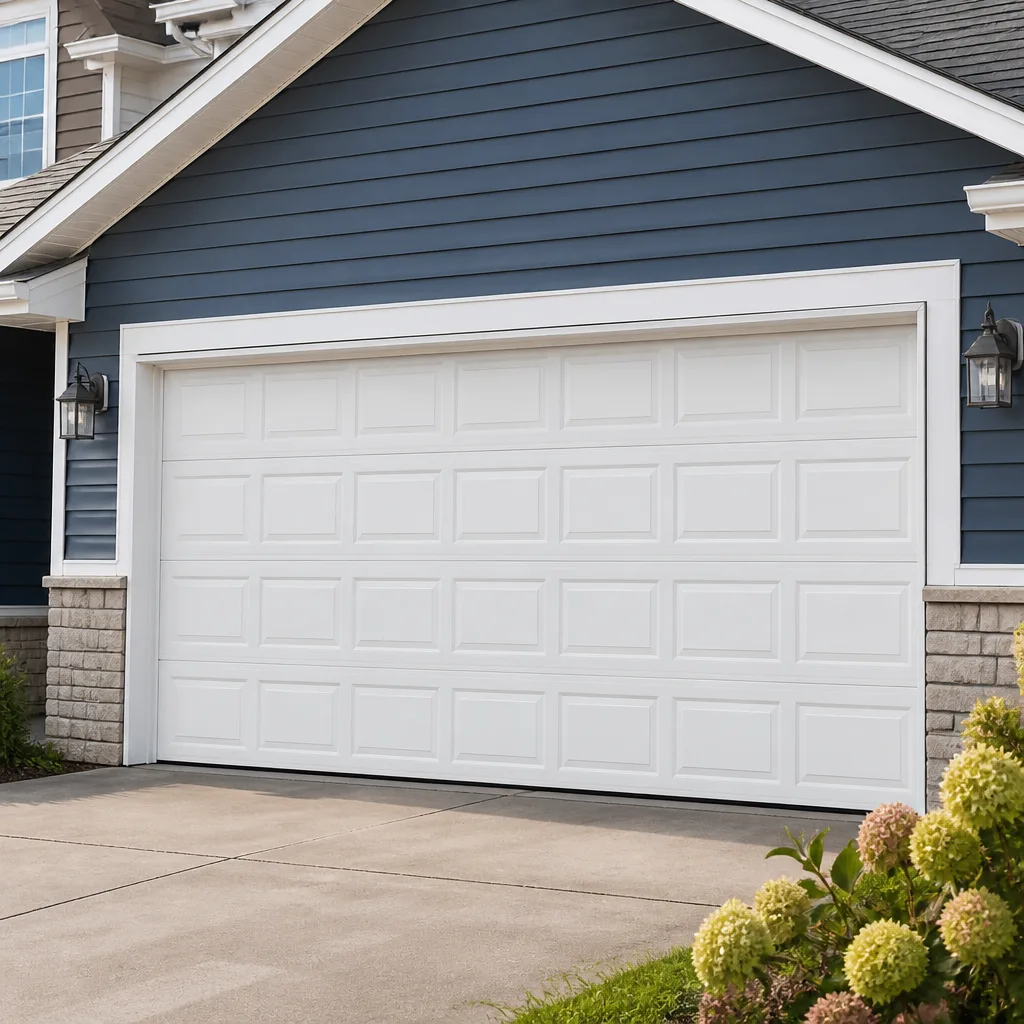 Raised-panel steel
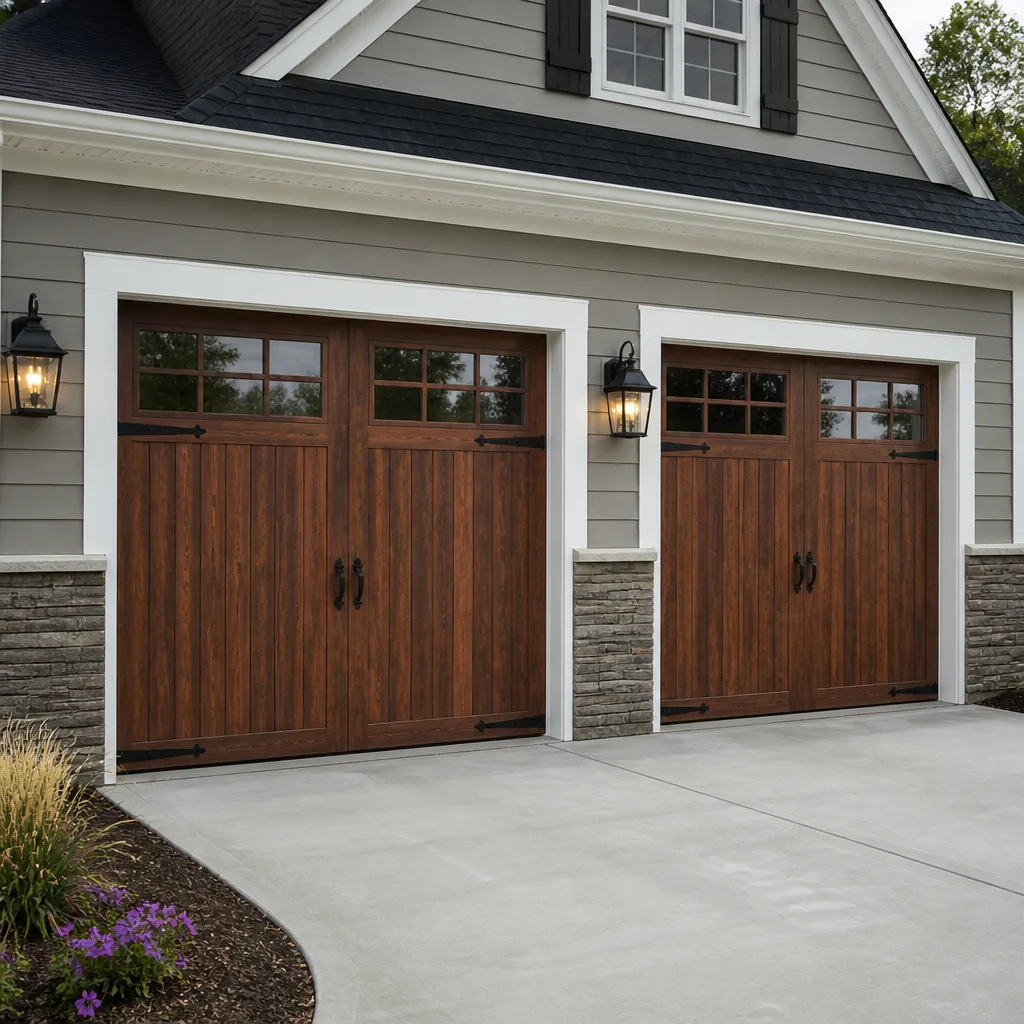 Carriage house
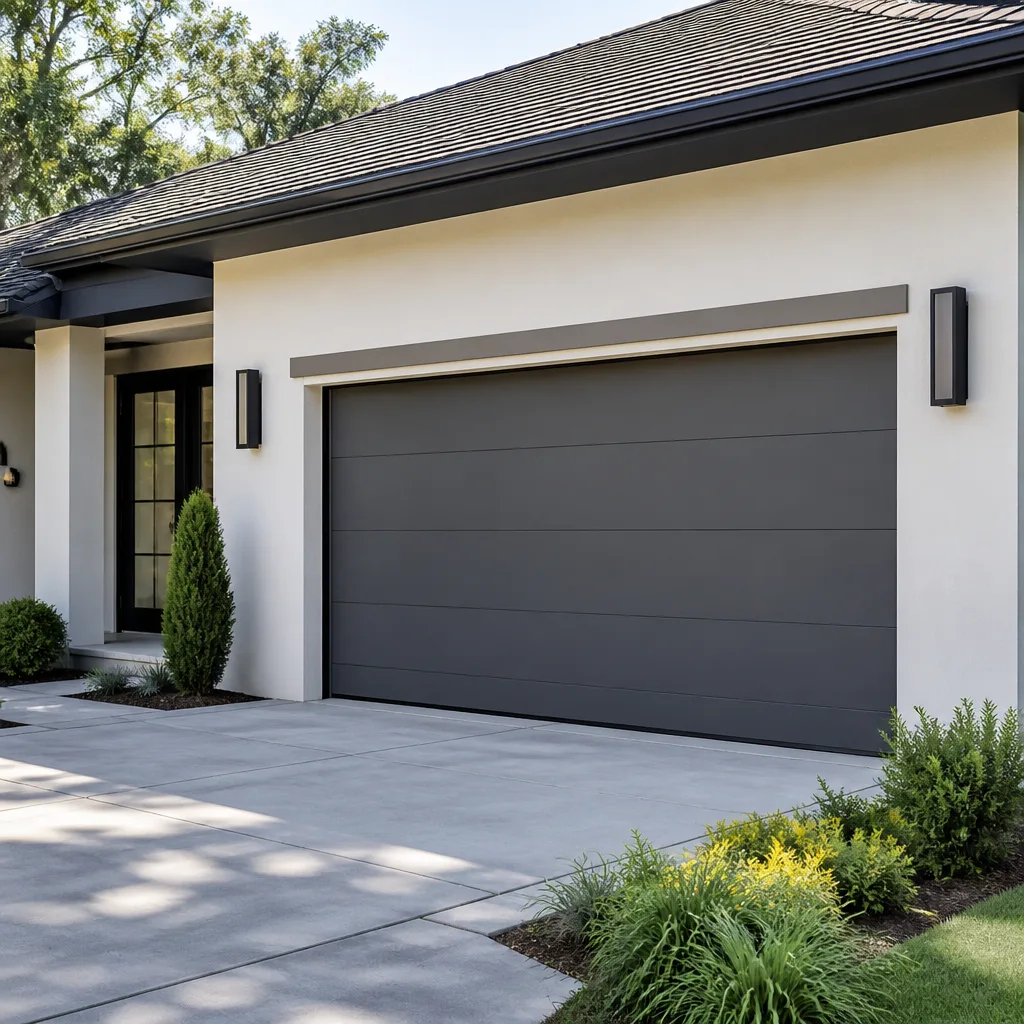 Modern flush
 Full-view glass
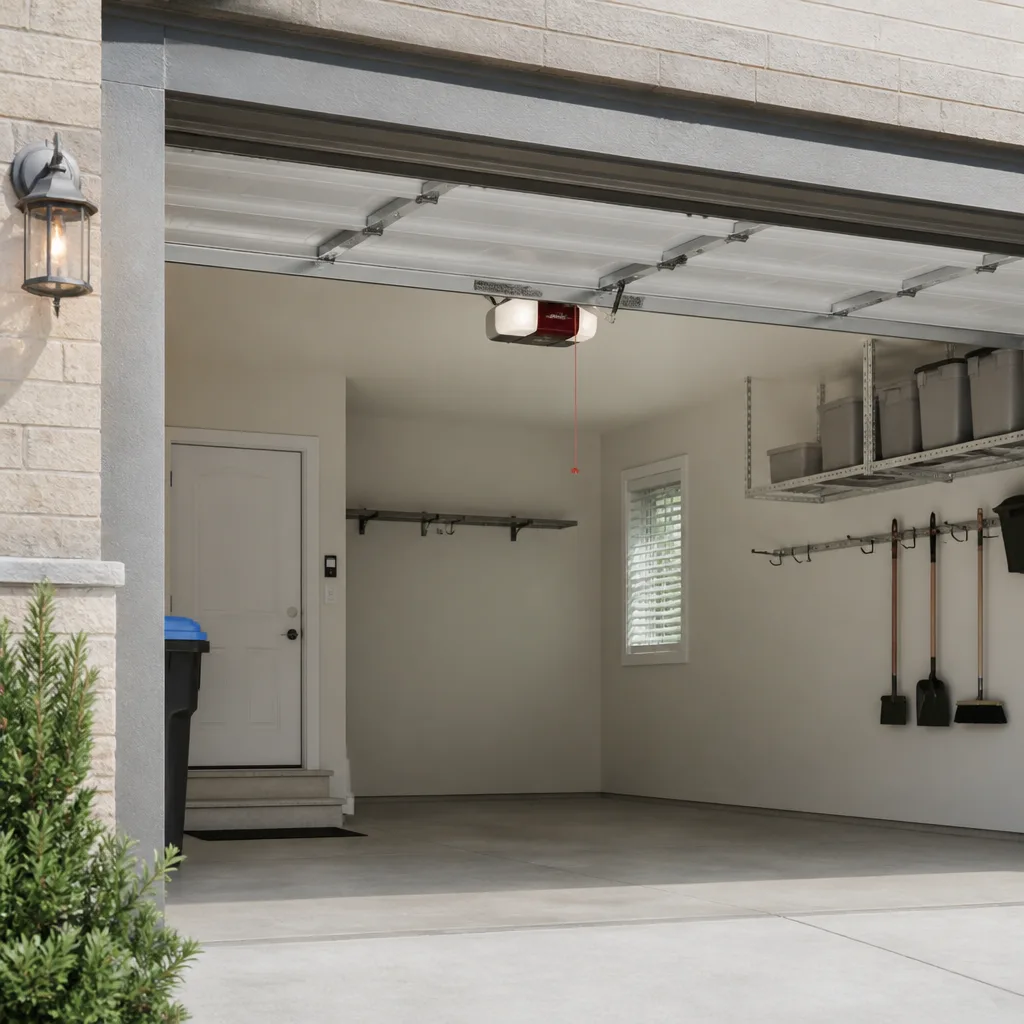 LiftMaster openers
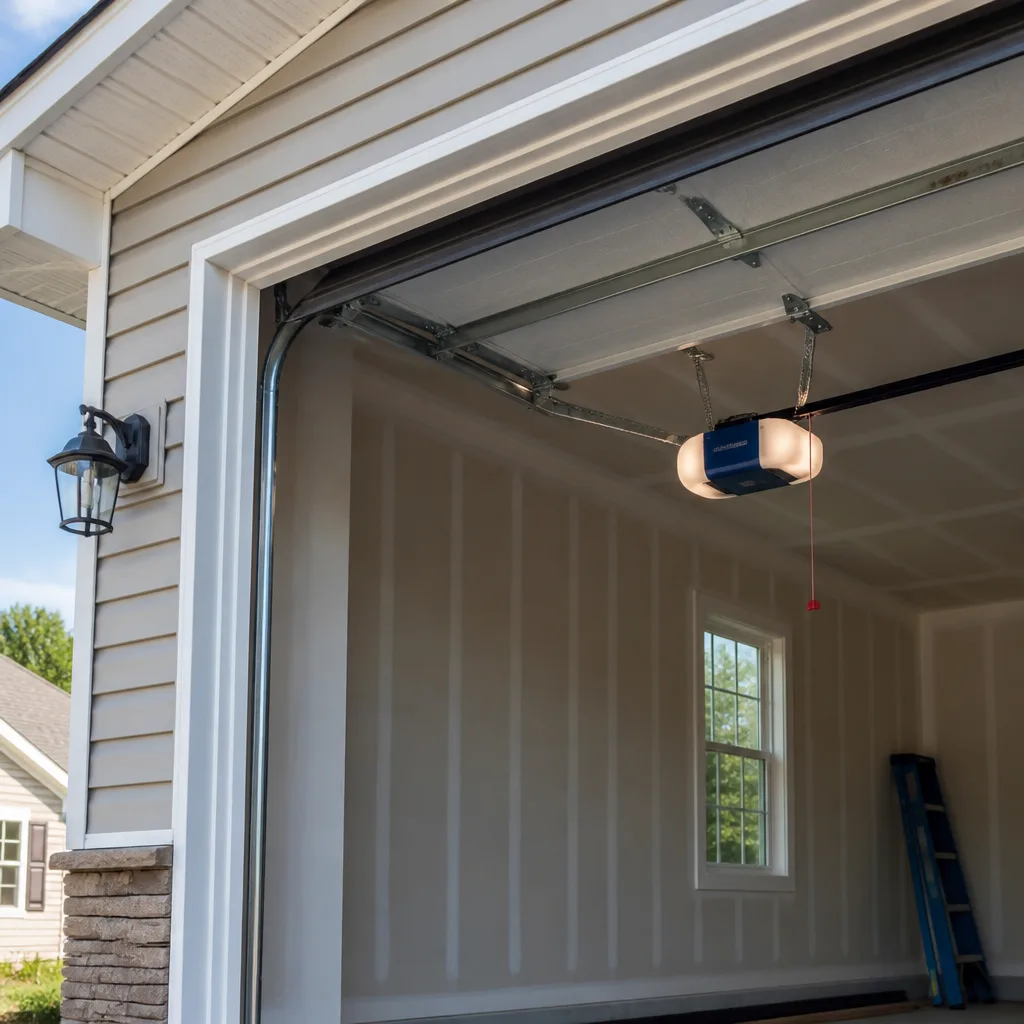 Chamberlain openers
Full 25-point door and opener safety check with every visit - springs, cables, rollers, tracks, and your LiftMaster or Chamberlain opener included
You get a price before we start. It does not change when the pro arrives.
Get your free estimateGarage Door Warning Signs: A Shakopee Homeowner’s Reference Guide
A grinding noise isn’t always a broken spring. A door that rises slowly isn’t always a failing opener. That mismatch between what a door sounds like and what’s actually wrong underneath is where most homeowners lose money – either by brushing off a genuine failure or by paying for a replacement when a simple adjustment or lubrication would have done the job. This guide is built to close that diagnostic gap. You’ll learn how to read sound, spot visual warning signs by urgency level, understand why cold-weather symptoms in Shakopee can mask or mimic real failures, and know exactly which three signs mean stop using the door today.
Quick Answer
The most reliable garage door warning signs are unusual sounds (grinding, squealing, popping, or rattling), a door that’s slow going up but fast coming down, visible sagging or bent tracks, and any door that won’t reverse when it meets an obstruction. The three signs that mean stop immediately are a visibly broken spring, a door hanging off its tracks, and a door that closes on its own. Everything else can usually be watched for a short window or scheduled for repair.
Styles & brands we work with
- Raised-panel steel
- Carriage house
- Modern flush
- Full-view glass
- LiftMaster openers
- Chamberlain openers
Table of Contents
- What Your Door’s Sounds Are Telling You
- Visual Warning Signs Ranked by Urgency
- The “Slow Up, Fast Down” Pattern Explained
- How Shakopee Cold Weather Masks and Mimics Warning Signs
- The Three Signs That Mean Stop Using the Door Now
- A 30-Day Watchlist for Symptoms That Don’t Need an Immediate Call
- Why Brand and Age Affect Which Symptoms You’ll See
- How a Professional Diagnostic Actually Works
What Your Door’s Sounds Are Telling You
Sound is the most useful diagnostic tool a homeowner has, because a garage door almost always tells you something is wrong before it fails completely. The trick is knowing which sounds point to which component. A grinding noise, for example, often comes from worn rollers or a dry torsion shaft bearing, not from the spring itself. Squealing usually means metal-on-metal contact at the hinges or rollers and often responds well to proper lubrication. A loud popping sound is different – that’s frequently a torsion spring that’s just failed, and it’s a stop-and-call situation. Rattling that gets worse over weeks usually points to loose hardware.
We’ve seen this distinction matter most in Shakopee’s older housing stock, where doors installed a decade or more ago with original rollers and hinges start making noise that gets misread as a major failure. Here’s the sound-to-cause map we use when we’re on a diagnostic call:
- Grinding: Likely worn rollers, a dry bearing, or a track misalignment. Can often be resolved with roller replacement and lubrication.
- Squealing or high-pitched whine: Metal-on-metal contact at hinges, rollers, or the torsion tube. Lubrication is the first fix to try.
- Popping or a loud bang: Usually a torsion spring failing. Stop using the door and call for spring repair.
- Rattling that worsens: Loose bolts, brackets, or hinges. Left alone, this can grow into a track or panel problem.
- Grinding that only happens during the opener’s run: Often the opener’s gear or chain, not the door. Points to the opener side of the system.
What you’ll notice is that two of these five are watch-and-schedule and three are call-sooner. Distinguishing them prevents both the too-late problem and the pay-for-a-replacement-you-didn’t-need mistake. If any grinding or squealing continues after the door has been lubricated and checked for loose hardware, it’s worth booking a proper garage door repair diagnostic rather than guessing.
Visual Warning Signs Ranked by Urgency
Visual warning signs sort cleanly into three tiers: what you can watch for up to 30 days, what needs a call within a week, and what needs a call today. Most homeowners either ignore the whole list or panic at the first item. The calibrated read is what keeps you from making the wrong decision.
Tier 1 – Watch for up to 30 days
- Small dents or dings in the door panels that don’t affect operation.
- Faded or peeling paint on a steel or wood door.
- Weatherstripping that’s cracked or starting to pull away at the bottom edge.
- Minor rust spots on hinges or track fasteners.
- A single uneven panel gap that hasn’t changed in weeks.
Tier 2 – Call within a week
- The door is noticeably out of balance – it feels heavy when you lift it by hand (with the opener disengaged).
- The track is visibly bent or bowed.
- The safety reverse fails when you test it with a 2×4 on the ground. This is a test, not a repair – do not try to adjust the opener yourself.
- Rollers are chipped flat or visibly worn.
- The opener runs but the door doesn’t move, or the door jerks and stalls mid-travel.
Tier 3 – Stop using the door today
See the dedicated section below. Any sign on the stop-now list needs a professional on site before that door moves again.
In Shakopee, the Tier 2 item that comes up most is the safety reverse test failing after months of a door that was fine. That’s often a dirty sensor eye or a misaligned track, not a failed opener, and it’s worth a look through garage door opener repair rather than assuming you need a new unit.
The “Slow Up, Fast Down” Pattern Explained
If your door rises sluggishly but drops fast, you’re looking at a spring tension problem almost every time – not a failing opener. This is one of the most commonly misread symptoms, and it’s worth understanding why, because it changes who you call.
Torsion springs are calibrated to counterbalance a specific door weight. As a spring winds down toward failure, it loses some of its lift force. The opener has to work harder on the way up, so the door drags. On the way down, gravity does most of the work, and the opener’s descent speed target is easier to hit – so the door moves fast and can feel like it’s slamming. Homeowners often assume the opener itself is failing because “slow” feels like a motor fault, but the opener’s actually doing extra work to compensate.
- Test: Disengage the opener (pull the manual release) and lift the door by hand to about halfway. If it feels noticeably heavier than it used to, spring tension is the likely cause.
- Stop: Do not continue lifting repeatedly if the door feels heavy. You can also feel a torsion spring that’s lost tension by looking for a visible gap in the coils – a broken spring shows a clear separation.
- Call: This is a spring diagnostic, not a DIY fix. Torsion spring work requires proper winding bars and training. Attempting it yourself is genuinely dangerous.
We work on the spring systems in the brands we see most in Shakopee homes – Amarr, Wayne Dalton, and Craftsman among them – and the slow-up/fast-down pattern comes up on all of them as springs age. If your door matches this pattern, call us for spring repair before the spring breaks completely. A tension problem caught early is a straightforward repair; a snapped spring can damage panels and the opener too.
How Shakopee Cold Weather Masks and Mimics Warning Signs
Winter in Shakopee changes the way a garage door behaves, and it can both hide real problems and create symptoms that look worse than they are. Knowing the difference saves you a service call you didn’t need – or catches a failure you would have dismissed as “just the cold.”
What cold weather genuinely causes:
- Stiff grease. Lubricant in hinges, rollers, and opener chains thickens at low temperatures, making the door run slower and louder than it does in summer. This is normal and usually resolves as the door warms up with use.
- Slower opener response. A cold opener can take a beat longer to start a cycle. If it starts within a second or two, that’s temperature, not failure.
- Weatherstripping shrink. The bottom seal can pull away in the cold, letting drafts through. Cosmetic and fixable, not dangerous.
What cold weather mimics – but isn’t:
- A slow-up door that doesn’t improve after warming up. If the door is still heavy after 10+ minutes of cycling, spring tension is failing and it isn’t just the grease.
- Grinding that gets worse through the winter. Cold can amplify an existing roller or bearing problem. If the grinding deepens as the season goes on, it’s mechanical, not temperature.
- Balking openers. Cold weather can bring out a failing opener capacitor. If the opener struggles to start a cycle even when the door is easy to lift by hand, the opener itself needs attention.
The practical rule: check whether the symptom goes away after a few cycles once the door’s warmed up. If it does, it’s temperature. If it doesn’t, it isn’t. Shakopee’s cold snaps hit around January and February, and that’s when most of the “is my door broken or just cold” calls come in. Our technicians have up to 14 years of experience with cold-climate door behavior, and the first question we ask is always whether the symptom changes with temperature.
The Three Signs That Mean Stop Using the Door Now
Three warning signs are safety-critical, not inconvenience-level. If you see any of these, stop using the door and call for garage door repair Shakopee before the door moves again. This isn’t a “watch it for a few days” list – it’s the list that keeps you and your family out of the hospital.
- A visibly broken torsion or extension spring. Look at the spring above the door (torsion) or alongside the track (extension). A torsion spring shows a clean break in the coil when it fails – you’ll usually hear a loud bang when it happens. An extension spring that’s snapped will be stretched with a visible gap. Do not lift the door by hand, and do not try to operate it with the opener. A door with a broken spring is held up by the opener alone, which can fail or drop the door.
- The door is off its tracks. If the door has jumped a track, is hanging at an angle, or a roller is out of the track, stop. Operating the door further can bend panels, snap cables, or bring the door down. Torsion cables are under extreme tension and can cause serious injury if they fail while someone is nearby.
- The door closes on its own, or the safety reverse fails. A door that reverses on a person, a pet, or an object is a serious safety failure. So is a door that won’t reverse at all when tested. Don’t disable the opener’s safety systems to “make it work” – fix the underlying problem first. This is the one warning sign where a small DIY error (adjusting the opener’s force setting) can create a real hazard.
Springs, cables, and torsion assemblies are the most dangerous parts of any garage door system – this is work that demands a specialist, not a general handyman. If you see any sign on this list in your Shakopee home, call (866) 479-4598. We answer 24/7. Fast dispatch from 7am to 7pm, Sunday through Friday.
A 30-Day Watchlist for Symptoms That Don’t Need an Immediate Call
Some warning signs are worth tracking rather than fixing right away. Here’s how to build a simple log so you know whether a symptom is stable or getting worse – which makes the eventual diagnostic call far more useful.
Start a note on your phone or a pad in the garage. Each week, run the door once and record:
- Sound: Note the type (grind, squeal, pop, rattle) and where it comes from – overhead, at the track, at the opener.
- Speed: Does the door rise and fall at the same speed as last week, or is one direction consistently slower?
- Balance test: With the opener disengaged, lift the door halfway. Is it still easy? Does it hold position?
- Safety reverse test: Place a small object (a 2×4 works) in the door’s path and confirm the door reverses on contact.
- Visual: Check the track for new bends, the springs for any visible gap, and the rollers for flat spots.
After 30 days you’ll either see a stable pattern – which usually means normal wear – or a worsening trend, which is the signal to book a professional diagnostic. In Shakopee’s climate, lubrication is the single most effective maintenance step you can take, and most “new sounds” that appear over a 30-day window in a door that’s otherwise balanced are fixable with proper lubrication and hardware tightening. If the sound doesn’t respond to lubrication, schedule a diagnostic rather than repeating the same fix.
Why Brand and Age Affect Which Symptoms You’ll See
The brand of door and opener in your garage affects which warning signs you’re more likely to see first. We work on the brand already in your garage – and in Shakopee homes that’s most often one of the majors: Amarr, Wayne Dalton, Craftsman, or Raynor, along with LiftMaster, Chamberlain, Genie, and Clopay. Multi-brand fluency matters here because the diagnostic path is different for each.
- Wayne Dalton: Common in Shakopee’s mid-2000s construction, and our diagnostic calls here often start with roller and hinge noise as original hardware ages.
- Amarr: Steel doors that tend to show panel dents and bottom-seal wear first; opener-side symptoms tend to show up later.
- Craftsman: Often paired with a Craftsman opener, which means a stuck door is more often an opener gear or logic board issue than a door issue.
- Raynor: Heavier commercial-grade hardware on some residential models, which means balance issues show up as slow-up/fast-down more clearly.
The practical implication: don’t assume a symptom means the same thing on every door. A grinding sound on one brand is a roller problem; on another it’s a bearing. The technician’s job is to know which. When you call us with a brand and a symptom, we can usually narrow the cause before we arrive – which saves diagnostic time and keeps the eventual repair focused. That extends to garage door installation too: when a door has reached the end of its life, knowing the brand already in the garage helps match a replacement to the hardware and opener you’ve been using.
How a Professional Diagnostic Actually Works
A professional diagnostic isn’t just listening to the door. It’s a sequence that isolates the door from the opener, tests each subsystem, and confirms which component is failing before any repair is quoted. Understanding the sequence helps you know what to expect and what questions to ask.
- Disengage the opener. The technician pulls the manual release so the door can be tested by hand. This isolates the door’s mechanical balance from the opener’s motor.
- Lift test. With the door disengaged, the technician lifts it partway and checks whether it holds position. A door that sinks or feels heavy points to spring tension. A door that’s easy to lift rules out spring balance.
- Spring and cable inspection. Visual check of torsion or extension springs for fatigue, gap, or break. Cables are checked for fraying or slack. This is the step where most safety-critical findings appear.
- Track and roller inspection. Each track section is checked for alignment, bends, and obstructions. Rollers are checked for flat spots and worn bearings.
- Opener cycle test. The opener is re-engaged and run through a full cycle while the technician observes. Speed, sound, and force are noted. If the door cycles well but the opener hunts or reverses, the opener is the problem.
- Safety reverse test. The photo-eye and mechanical reverse are both tested against an obstruction. This is the step that determines whether the door is safe to keep using.
Every diagnostic ends with a written estimate, and the price is agreed before any work starts. That’s the standard we hold to. If the technician finds a spring at 40% of its service life, you’ll know whether to replace it now or watch it – not be pressured into a full replacement. And if the issue turns out to be a lubrication point that hadn’t been hit, we’ll tell you that too. Find the price you’re expecting on the estimate, not on the final invoice.
Common Mistakes to Avoid
- Assuming a slow door means a failing opener. Most slow-up doors are a spring tension problem. Replacing an opener to fix a slow door wastes money and leaves the actual problem in place.
- Ignoring the safety reverse test because “it seems to work.” The reverse test is a specific 2×4-on-the-ground check, not a general impression. Test it monthly, not once.
- Lubricating a broken spring. Lubrication helps a slow, squeaky but intact spring. It does nothing for a broken one – and running the door on a broken spring can drop it.
- Trying a DIY torsion spring replacement. Torsion springs are wound to dozens of turns of tension. Without proper winding bars and training, the risk of serious injury is real. This is a call-a-professional repair.
- Disabling the safety reverse to “get the door to work.” A door that won’t reverse is a hazard, especially with kids and pets in the garage. Fix the underlying problem instead of disabling the safety system.
- Watching a symptom for months that should have been called in a week. Tier 2 signs (bent track, chipped rollers, a failing reverse) don’t improve on their own. A 30-day watch has a purpose; a 6-month watch usually means paying for more damage later.
- Skipping winter lubrication in Shakopee. Cold-weather door noise is normal, but it’s also the time when dry rollers and hinges wear fastest. Lubrication in late fall goes a long way.
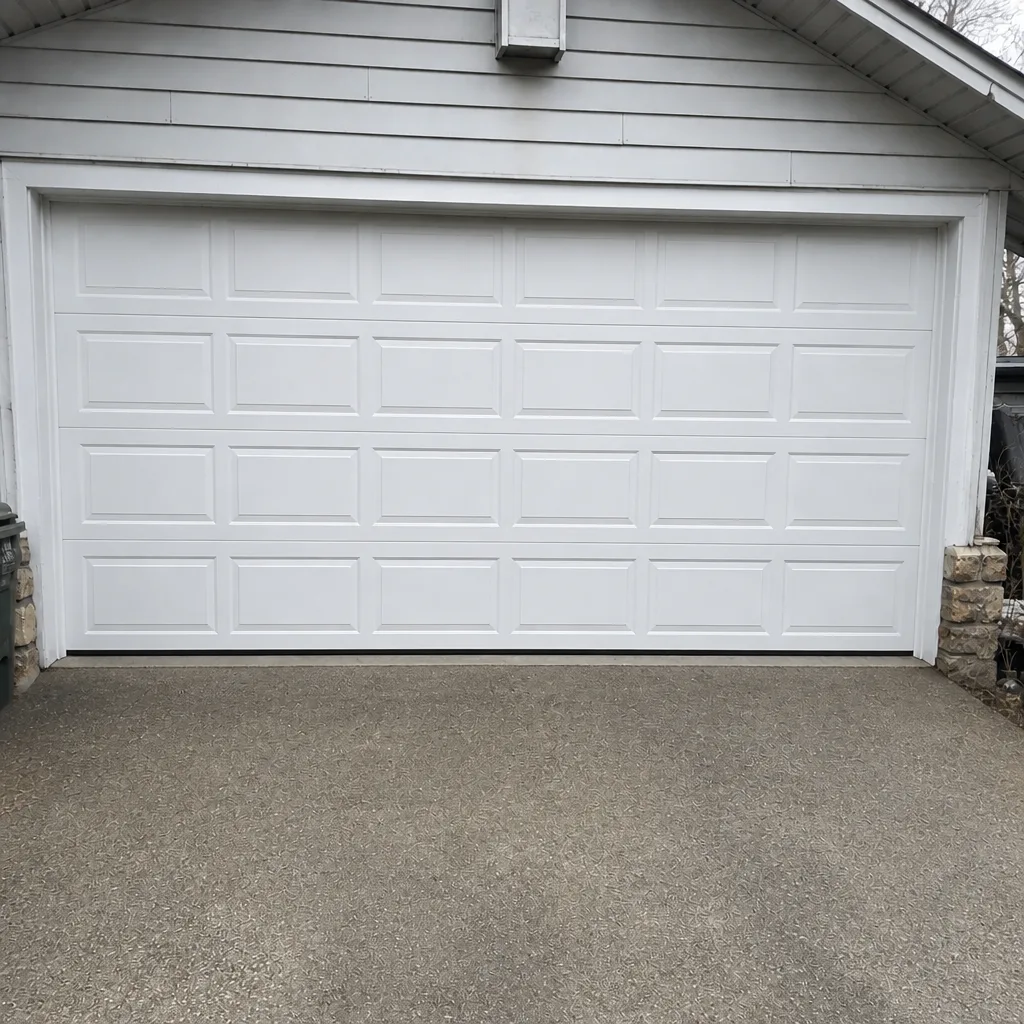
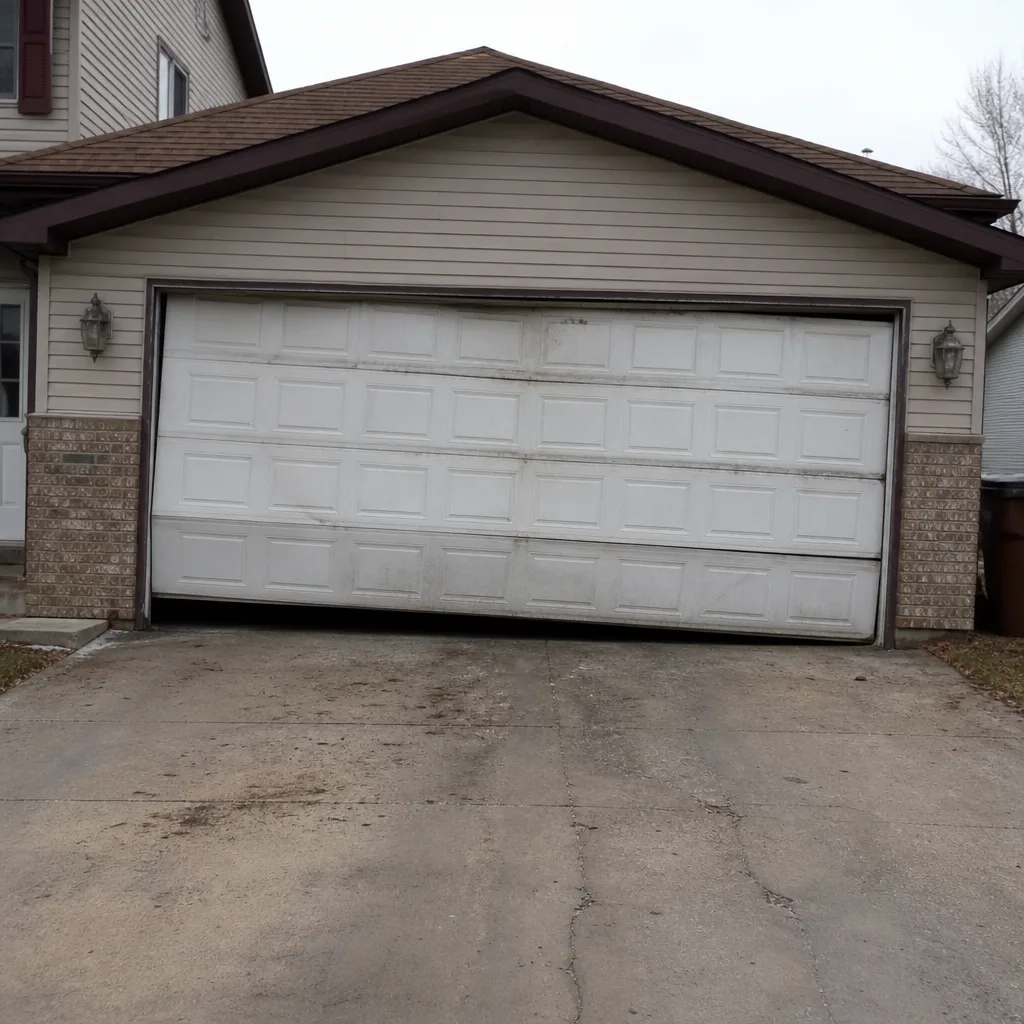
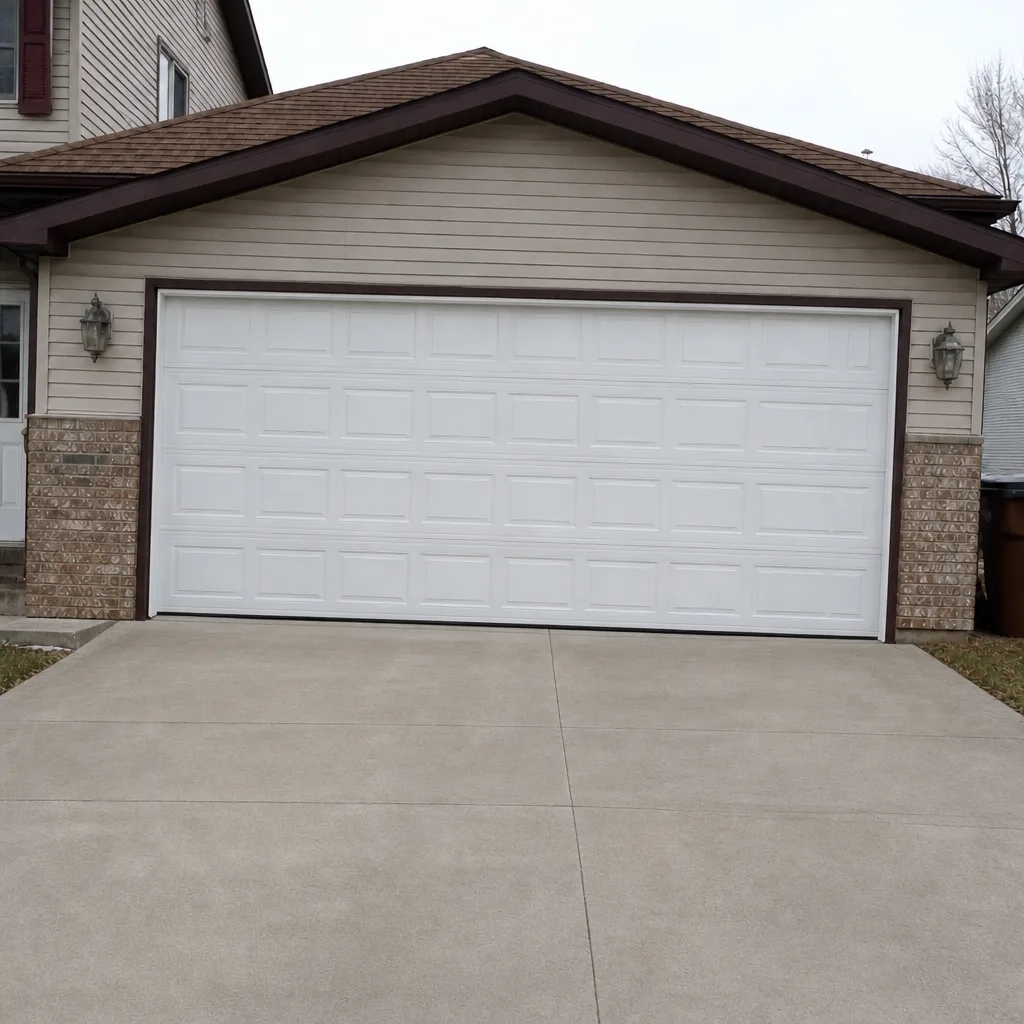
See the difference
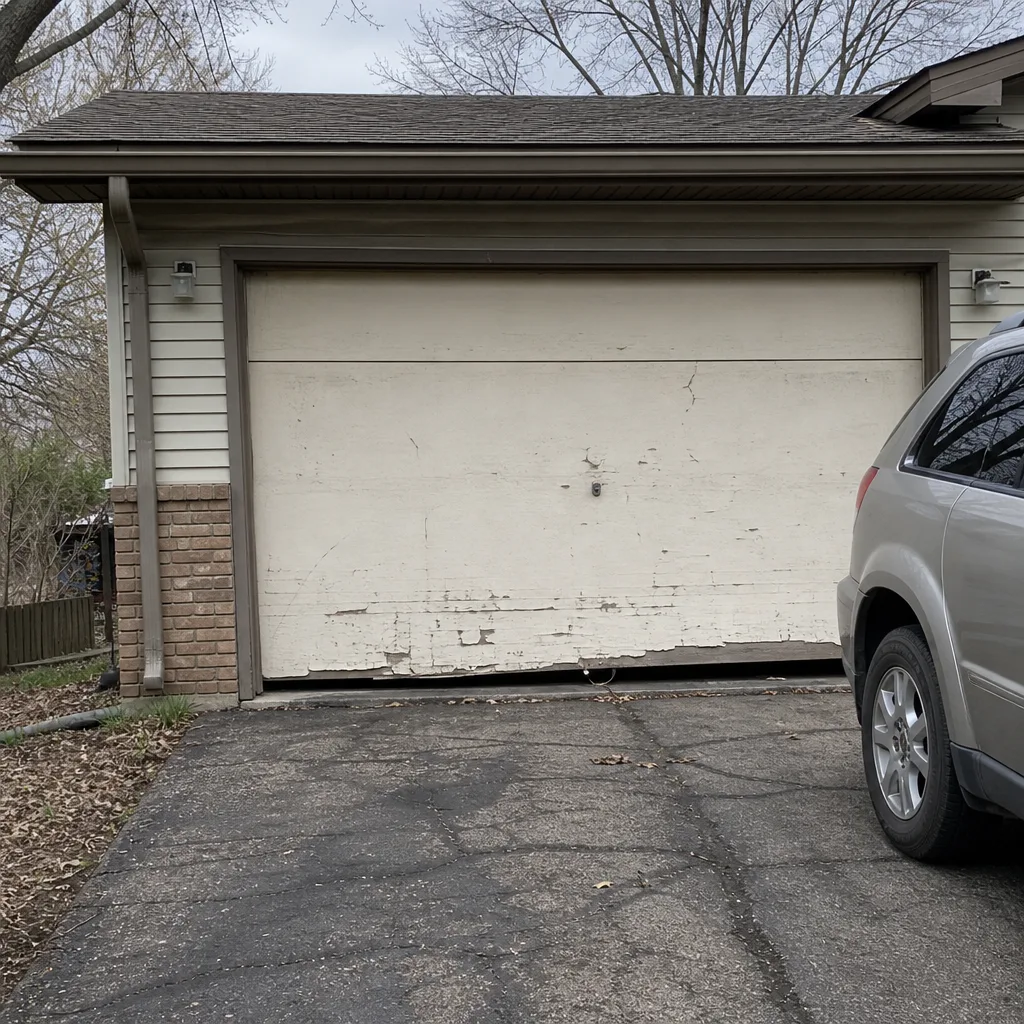 Before
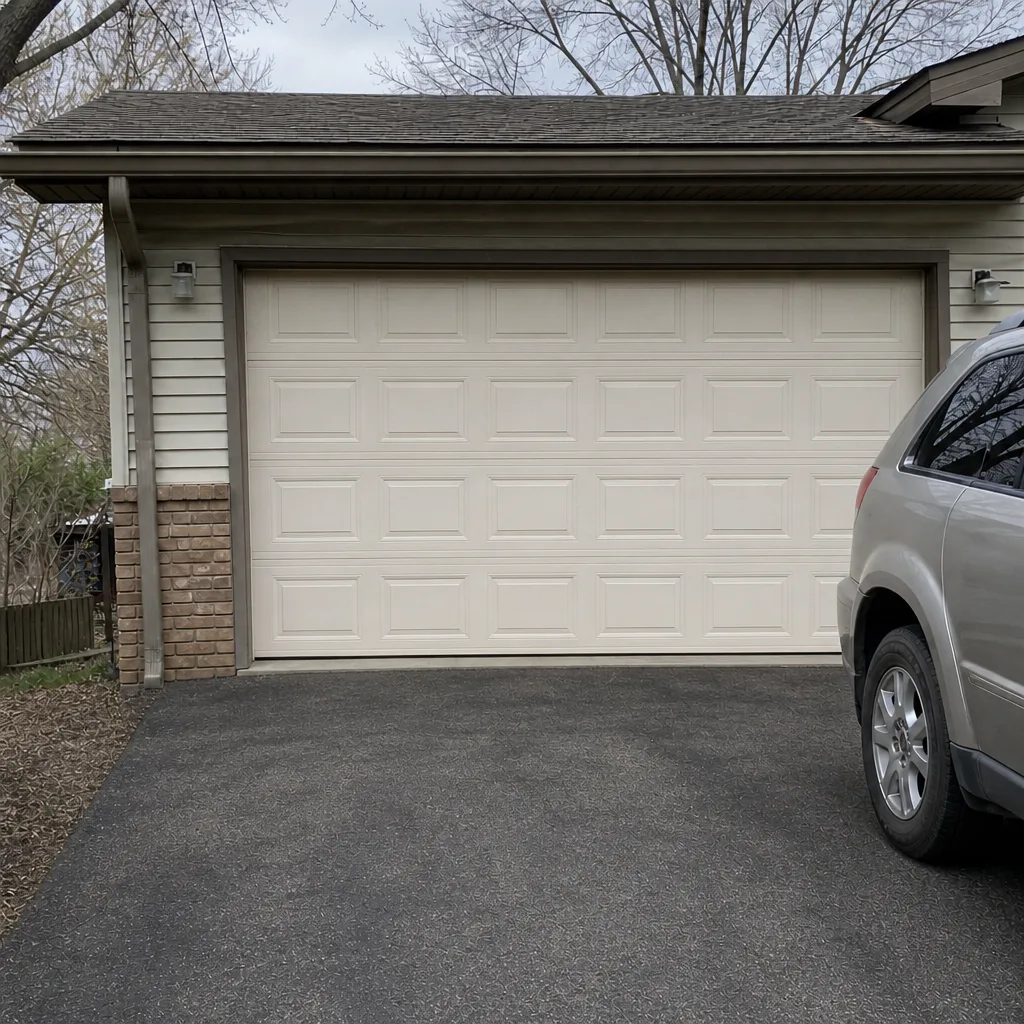 After
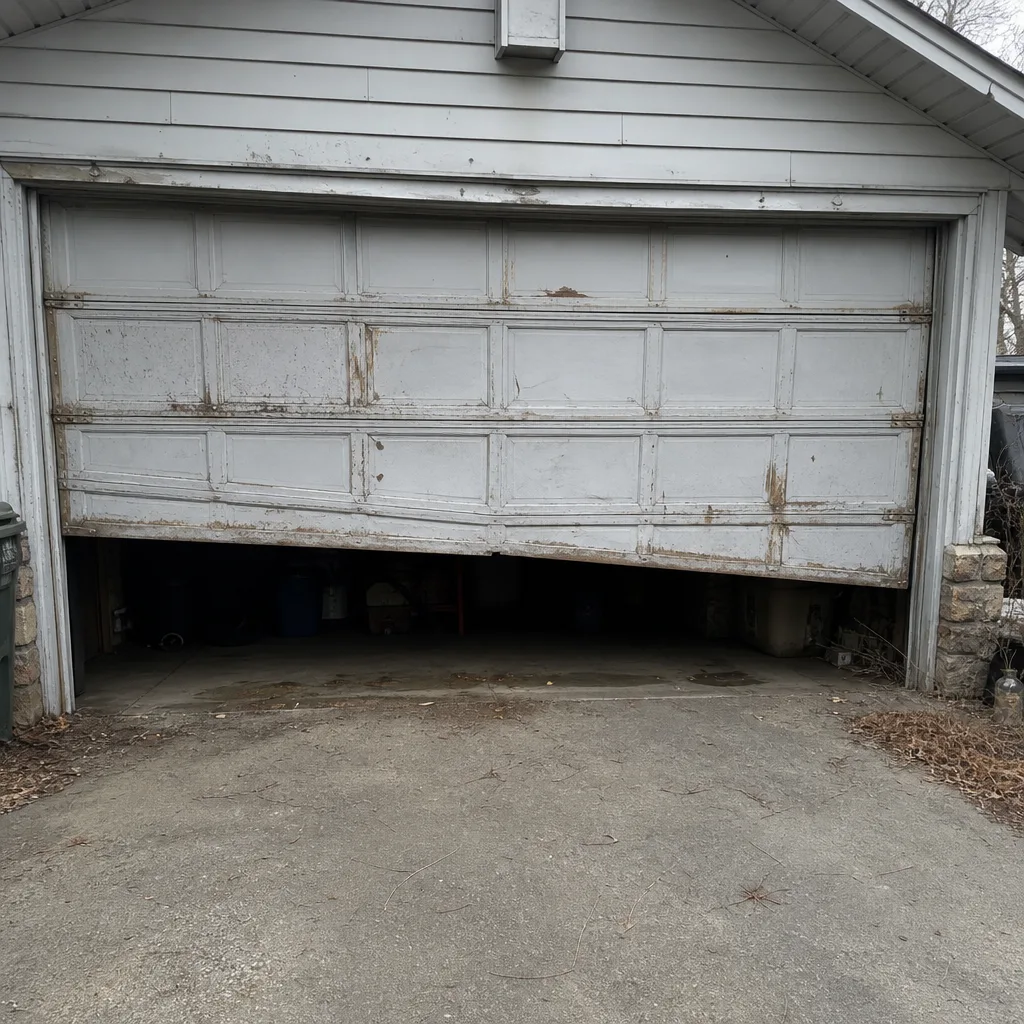 Before
 After
 Before
 After
When to Call a Professional
Call a professional if you’re seeing any Tier 3 sign, a Tier 2 sign that’s gotten worse over a week, a safety reverse that fails, or any symptom you’ve watched for 30 days that isn’t improving. Also call if the door’s brand, age, or opener model is one you’re not sure about – a specialist can tell you in a few minutes whether the door is safe to keep using. Garage Door Repair Shakopee offers free estimates in Shakopee – call (866) 479-4598. We answer 24/7, with fast dispatch from 7am to 7pm, Sunday through Friday. If you’re facing a stuck or unsecured door, we treat emergency garage door service as a real service line, not a phone-tree option. Call anytime the phone line is open, and we’ll get you booked in. Springs, openers, tracks, and full doors – one call covers the door, the opener, and everything in between.
Frequently Asked Questions
The most common warning signs are unusual sounds (grinding, squealing, popping, or rattling), a door that’s slower going up than coming down, and a failed safety reverse test. Popping or a loud bang usually points to a broken spring and needs a same-day call. Grinding or squealing often responds to lubrication and hardware tightening first, so it’s worth watching for a short window before calling.
Spring repair pricing depends on whether it’s a torsion or extension spring, and whether one or both are replaced. A matched pair is usually replaced together, so a pair costs roughly twice a single spring. We give a written estimate before any work starts, and the price on that estimate is the price you pay. Call (866) 479-4598 for an exact quote – estimates are free.
Yes – for repair and emergency calls we offer same-day service where we can. If your door is off-track, has a broken spring, or won’t reverse, stop using it and call (866) 479-4598. We answer 24/7, and dispatch runs 7am to 7pm, Sunday through Friday. A call outside dispatch hours is booked into the next opening.
No. We give you a written estimate after the diagnostic, and the price is agreed before any work starts. If we find more than one issue, we’ll tell you what’s urgent, what can wait, and what it costs for each – and you decide. You won’t get a surprise invoice larger than the quote.
The local professionals we connect you with are licensed and insured as their state requires, and they specialize in garage doors – not general handyman work. That matters most on spring, cable, and torsion work, where the wrong tools or inexperience can cause serious injury. Our technicians have up to 14 years of experience with residential doors and openers.
Run the door a few times and see if the noise eases once it’s warmed up. If it does, it’s likely cold grease in Shakopee’s winter temperatures. If the grind, squeal, or rattle gets worse or stays constant, it’s mechanical. A grind that deepens through the season is a sign to book a diagnostic rather than keep lubricating.
The Bottom Line
The real value of understanding garage door warning signs is calibration. A grinding noise isn’t always a broken spring, and a slow door isn’t always a failing opener. Sort what you’re seeing into watch-for-30-days, call-within-a-week, and stop-using-today, and you’ll avoid both the too-late mistake and the overpay mistake. In Shakopee’s cold, pay attention to whether a symptom eases with warmth – that’s your easiest filter. The three signs that mean stop are a broken spring, a door off its tracks, and a door that won’t reverse. Everything else can be watched, logged, and called in when the pattern points one direction. Spring work is the most dangerous part of the system, and it’s work that demands a specialist – not a general handyman. If a sign on this guide matches what your door is doing, call (866) 479-4598 for a free estimate. We answer 24/7, with fast dispatch from 7am to 7pm, Sunday through Friday.
Written by the team at Garage Door Repair Shakopee.