
Last updated November 23, 2026
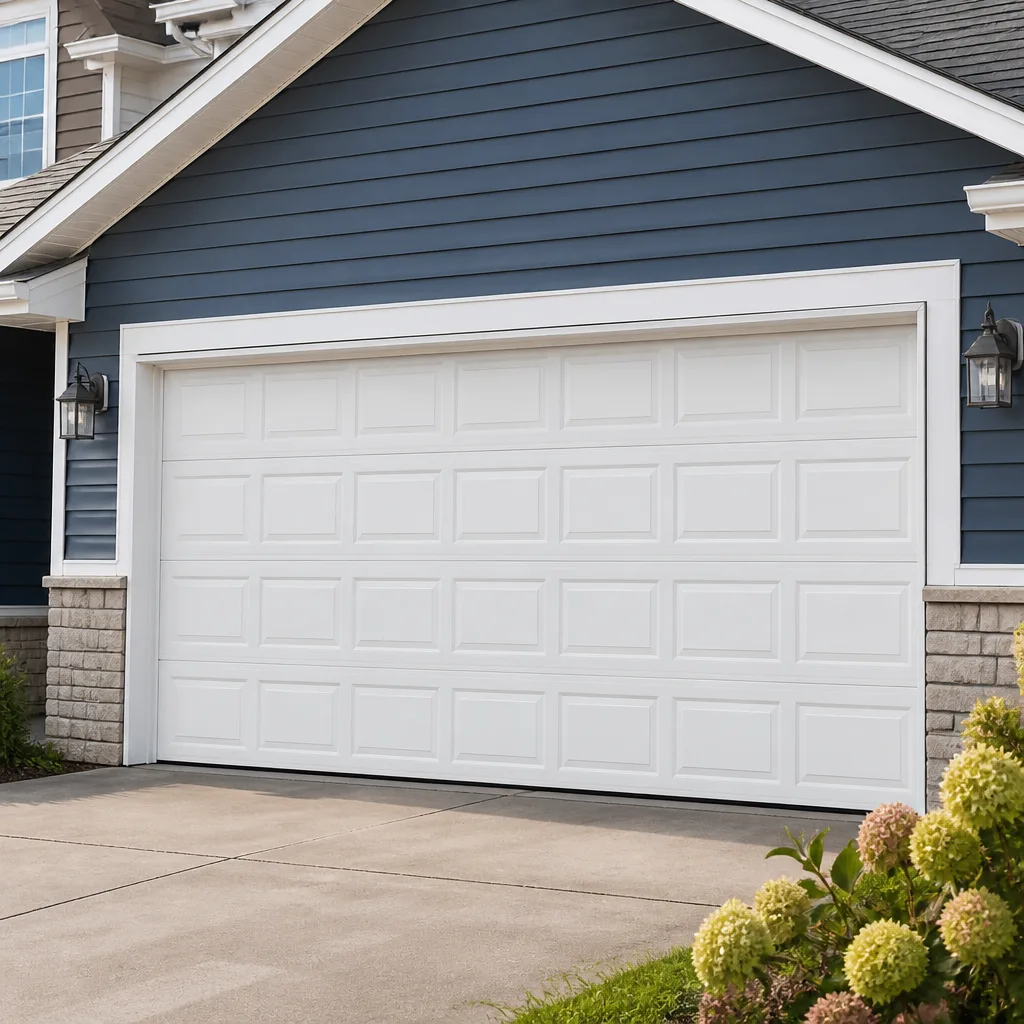 Raised-panel steel
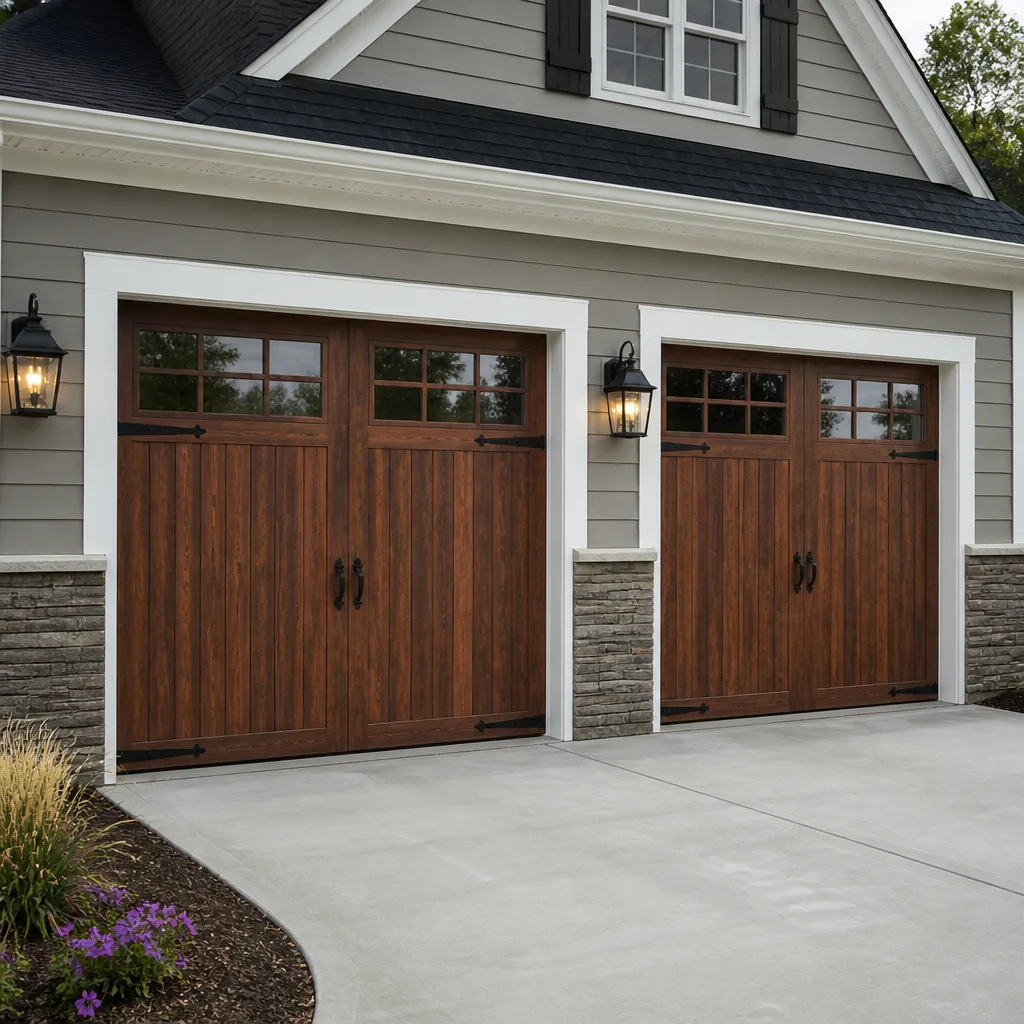 Carriage house
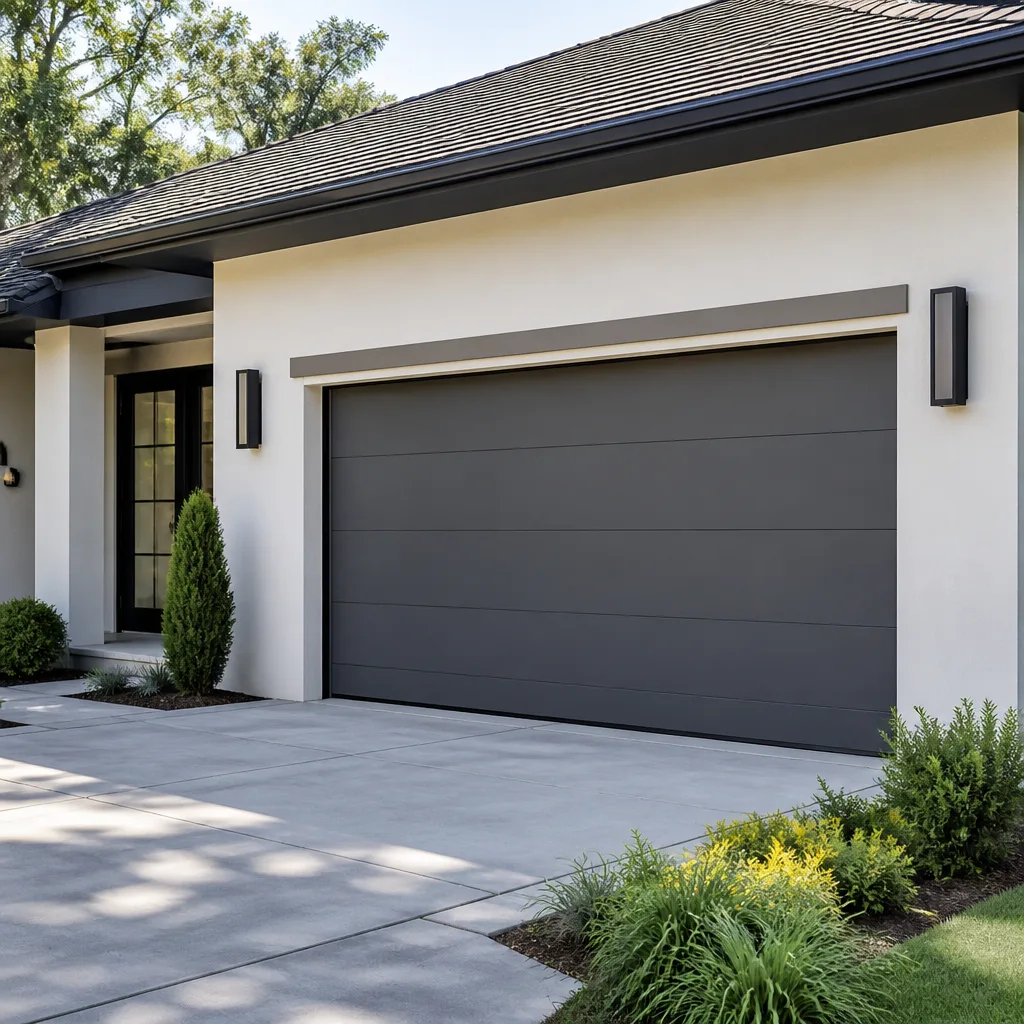 Modern flush
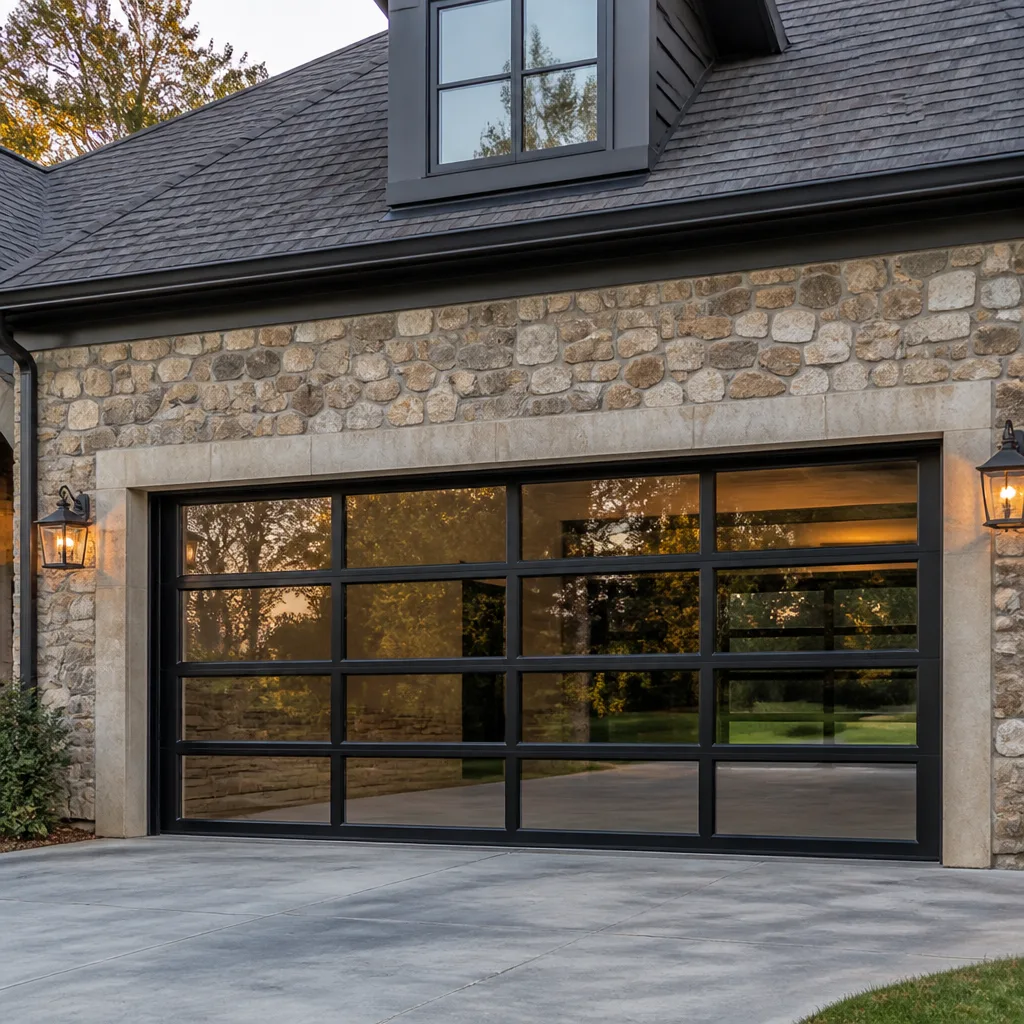 Full-view glass
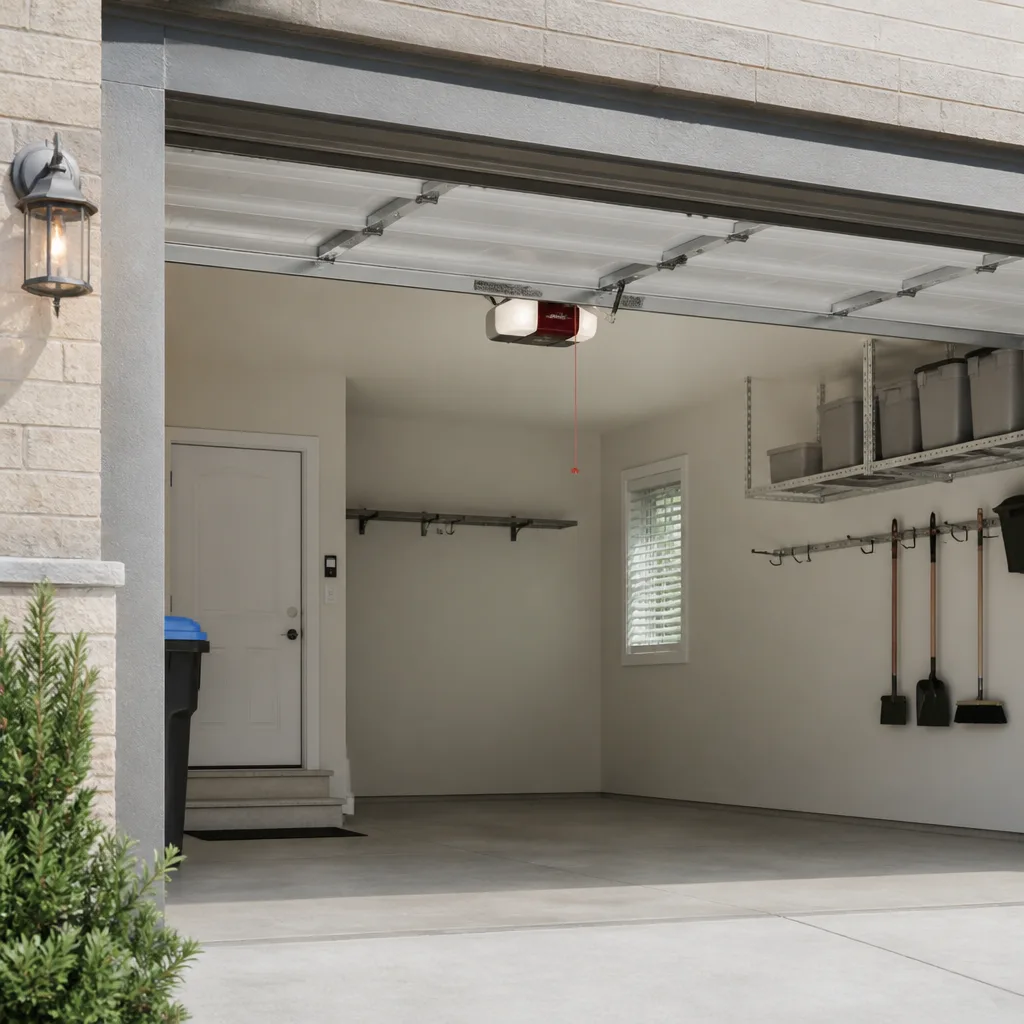 LiftMaster openers
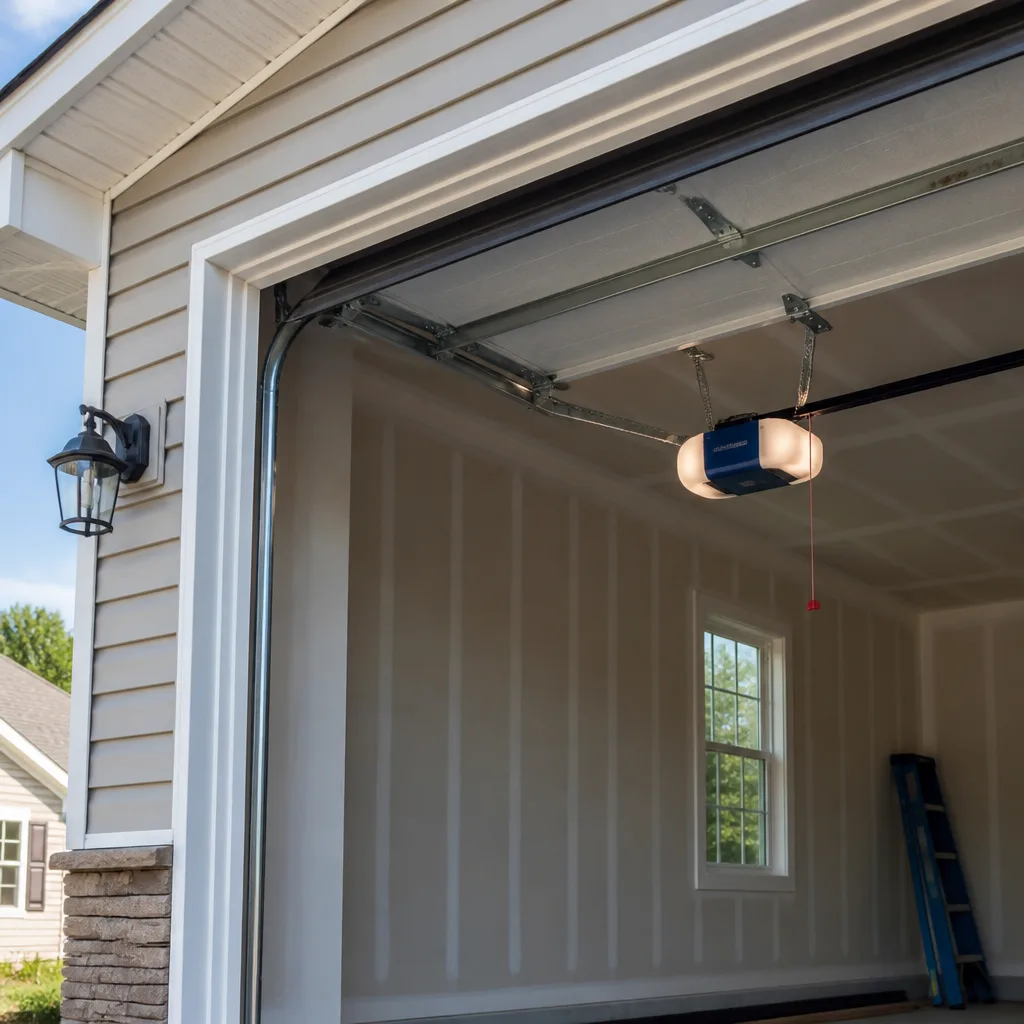 Chamberlain openers
Full 25-point door and opener safety check with every visit - springs, cables, rollers, tracks, and your LiftMaster or Chamberlain opener included
You get a price before we start. It does not change when the pro arrives.
Get your free estimateGarage Door Emergency Preparedness Guide for Shakopee Homes
Most garage door emergencies don’t start with a bang. They start with a decision. A spring snaps in a February cold snap, or the opener dies with the car parked inside on a morning when you need to be somewhere in twenty minutes. What you do in the first minute decides whether you’re facing a straightforward spring replacement or a bent track, a strained opener, and a door that won’t sit straight in the opening anymore. The wrong move is to force the door. The right move takes half a minute to learn.
This guide covers the emergencies that actually happen to Shakopee homes, from ice-storm failures to power outages to doors that jump the track. We’ll walk through what to do, what not to do, and how to give a technician what they need to fix things on the first visit.
Quick Answer
If your garage door fails in Shakopee, stop and don’t force it. A door with a broken spring or a jumped track can drop, twist, or buckle if you keep pulling, and that turns a repair into a full replacement. Secure the door where it sits, get your car out safely using the manual release if needed, and call Garage Door Repair Shakopee at (866) 479-4598. We answer 24/7, with fast dispatch from 7am to 7pm, Sunday through Friday.
Styles & brands we work with
- Raised-panel steel
- Carriage house
- Modern flush
- Full-view glass
- LiftMaster openers
- Chamberlain openers
Table of Contents
- Why Shakopee Homes Face Garage Door Emergencies More Often in Bad Weather
- What to Do in the First 10 Minutes of a Garage Door Emergency
- How to Use the Manual Release to Get Your Car Out
- Power Outage Protocol: Manual Operation and Re-Engaging the Opener
- What to Do If the Door Comes Off the Track
- How to Secure a Door That Won’t Fully Close
- Who to Call and What to Tell Them
- Prevention: What to Check Before Winter Hits
Why Shakopee Homes Face Garage Door Emergencies More Often in Bad Weather
Garage door failures aren’t spread evenly across the calendar. They cluster around weather events, and in Shakopee that means cold snaps, ice storms, and the freeze-thaw cycles that run from late fall through early spring. The reason is simple: torsion and extension springs are steel under constant tension, and steel behaves differently at 5°F than it does at 60°F. Add the expansion and contraction of the door panels and the metal tracks, and you get a system that’s under more stress in February than in June.
The neighborhoods along the Minnesota River corridor, from the older streets near downtown Shakopee out toward the newer construction in the Southbridge area, all see the same pattern. Cold weather drives failures because:
- Springs get brittle. The metal loses some of its flexibility in deep cold, so a spring that’s already near the end of its life is more likely to snap on the coldest morning of the month than on a mild one.
- Lubricant thickens. Grease in the rollers, hinges, and track gets stiff, so the opener works harder to move the door and the motor strains.
- Ice builds up at the threshold. A sheet of ice or a snowdrift under the bottom seal stops the door from closing fully, and the opener keeps pushing against a door that can’t move. That’s how safety reverse sensors get triggered, and how panels get stressed.
- Freeze-thaw warps the track. Water gets into a crack, freezes overnight, and pushes the metal out of alignment. A door that tracked fine in November can start binding by January.
The other thing that makes a Shakopee garage door emergency feel urgent is the garage’s role in daily life. For most households here, the attached garage is the main entry point to the house and the place the car lives. When the door won’t open, the car is trapped inside, and the whole morning falls apart. That’s why so many of the calls we take are less about the door itself and more about getting the car out without causing more damage.
One more local detail worth knowing: Shakopee gets genuine deep-winter cold, and a garage that’s attached to the house but not heated still drops well below freezing on a cold night. That means the door and its hardware are operating in conditions that accelerate wear. If your door is older, or the springs have never been replaced, the odds of a cold-weather failure climb each season.
What to Do in the First 10 Minutes of a Garage Door Emergency
The first ten minutes of a garage door emergency set the tone for the whole repair. A calm, methodical response keeps a broken spring a spring replacement. A panicked one, where someone keeps hitting the opener button or tries to muscle the door up by hand, is how tracks bend, cables come off their drums, and panels crack. The single most important rule is this: if you suspect a broken spring, stop operating the door.
Here’s the sequence we recommend, in order:
- Stop pressing the opener button. If the door is stuck, the opener is either fighting a broken component or has failed itself. Repeated activation does nothing good and can burn out the motor.
- Look before you touch. Stand back and look at the door. Is it sitting crooked? Are the cables slack or hanging? Is there a visible gap in a spring above the door? Any of those signs means don’t force it.
- Check whether the door is already partially open. If it’s up, leave it up and secure the opening the best you can. If it’s down, leave it down unless you need to get the car out.
- Locate the manual release. Every opener has a pull cord with a handle, usually red, hanging from the carriage that runs along the rail. This is how you disconnect the door from the opener when you need to.
- Disconnect power if you smell burning or hear grinding. Unplug the opener from the wall outlet if you suspect the motor is failing or has overheated. This is a simple safety step, not a repair.
- Call for service and describe what you see. The more accurately you can describe the failure, the more likely the technician arrives with the right parts.
One thing we want to say plainly: springs and cables are the most dangerous parts of any garage door system. A torsion spring under tension, or a cable that’s suddenly slack, can cause serious injury if you try to handle it yourself. We don’t give step-by-step instructions for spring work, and no one should. That’s work for a trained technician with the right tools. The same goes for anything involving the opener’s electrical components.
If you’ve followed that sequence and the door is stable, you’ve bought yourself time. If the door is unstable, secured, and blocking your car, our garage door repair service is built around exactly this situation: a stuck or unsecured door that needs a trained technician on site, not a wait-until-next-week appointment.
How to Use the Manual Release to Get Your Car Out
The manual release is the one piece of a garage door system every homeowner should know how to use. It disconnects the door from the opener so you can move the door by hand. This matters when the opener fails, the power goes out, or you simply need to get the car out while you wait for repair. But it has one critical exception, and getting it wrong is the most common way a Shakopee homeowner turns a spring repair into a track replacement.
The exception: never use the manual release to force open a door with a broken spring. A torsion or extension spring is what counterbalances the weight of the door. When a spring snaps, that counterbalance is gone, and the door becomes very heavy. Pull the release and try to lift it, and the door can come crashing down or twist off one side of the track. The same risk applies if a cable has snapped or come off its drum. If you see a broken spring or a slack cable, leave the door where it is and call for service.
If the door and springs are intact and the opener has simply failed or lost power, the manual release is safe and straightforward. Here’s how it works:
- Make sure the door is fully closed. Never pull the release with the door partway open, because the door can drop suddenly once it’s disconnected from the opener.
- Stand clear and pull the release handle down and toward the door. The handle hangs from the carriage on the rail. You’ll feel it disengage with a click.
- Lift the door by hand slowly and evenly. Use the handle or the bottom edge with both hands. A well-balanced door should move easily. If it feels heavy or binds, stop and lower it.
- Propped open, get the car out slowly. Have someone hold the door up if possible. Once the car is clear, lower the door gently all the way down.
- Don’t leave the door disconnected and unattended. Once you’re done, re-engage the carriage (see the power outage section below) or leave the door fully closed until a technician arrives.
The manual release is not a repair, and it won’t fix a failing opener. If the opener is the problem, our garage door opener repair service covers both the electrical and mechanical sides of the system, including the brands that make up most of what’s installed in Shakopee garages: LiftMaster, Chamberlain, Genie, and Craftsman among them.
One note for anyone whose opener is a belt-drive LiftMaster or Chamberlain: the release cord and carriage are the same design on most of these units, so the procedure above applies. If you’re not sure what brand or model you have, take a quick photo of the opener unit and the label on the back. It helps us identify the system and plan the visit.
Power Outage Protocol: Manual Operation and Re-Engaging the Opener
Power outages in Shakopee tend to arrive with the same weather that causes garage door failures: ice storms, high winds, and heavy snow that takes down lines. When the power goes out, your garage door opener is dead, but the door isn’t. It’s designed to be operated by hand once you disconnect it, and that’s the procedure we covered in the previous section. What we want to focus on here is the part most people get wrong: what happens when the power comes back.
When power returns, the door is disconnected from the opener. If you simply press the button, the opener will run the carriage along its rail without moving the door, and on some units it can jam. The correct sequence is:
- Make sure the door is fully closed. This is non-negotiable. The carriage has to line up with the door’s trolley for the reconnect to work.
- Press the opener button once to run the carriage. This lets the carriage move along the rail until it reaches the trolley.
- Pull the release cord toward the door to re-engage it. On most openers, pulling the cord toward the door (rather than away) lets the carriage catch the trolley. You’ll hear it click into place.
- Test the door. Press the button and watch the door move a foot or so, then stop it. If it moves smoothly, you’re reconnected. If it doesn’t move, or the opener just runs without lifting the door, the carriage didn’t catch.
There’s one situation where you should not re-engage the opener: if the door itself was damaged during the outage, or if you used the release because the springs had failed. In that case, leave the door disconnected and fully closed and call for a technician. Running a damaged door with the opener is how track damage happens.
For homes with newer openers, some models include a battery backup that lets the door operate for a limited number of cycles during an outage. If your opener has one, check the manual for how the unit indicates battery status. But don’t count on it: battery backups are a convenience, not a substitute for knowing the manual release procedure, and they don’t last forever. Many homes in Shakopee have openers that predate the battery backup feature, including a lot of older Craftsman and Genie units.
If the power didn’t fail but the opener is dead anyway, that’s a different problem, and it’s usually the opener itself. A technician can diagnose whether it’s a failed logic board, a bad capacitor, or a gear and sprocket problem, and whether repair or replacement makes more sense.
What to Do If the Door Comes Off the Track
A door that comes off the track is one of the more serious garage door emergencies, and the instinct to force it back into place is the most damaging thing you can do. When a door jumps a track, the rollers have come out of the vertical or horizontal channels, usually because the door was pushed or pulled while a spring or cable was failing. Forcing it back can bend the track, snap a hinge, or crack a panel. Once a track is bent, it isn’t just a track problem; it can mean the door never rides smoothly again.
Here’s how to handle it:
- Stop the door where it is. If it’s partially up and hanging, don’t try to lower it. If it’s down, leave it down.
- Don’t use the opener. If the door is off track, the opener will keep pulling it in a direction it can’t go. Disconnect the manual release only if the door is stable and fully closed.
- Look at where the rollers have left the track. Note which side and which corner. This tells the technician which vertical or horizontal track section is involved.
- Stabilize the door if it’s hanging. If the door is sagging on one side, block it from moving further if you can do so safely. Don’t put your hands or body under a hanging door.
- Keep people and vehicles clear. Keep the car out of the garage until it’s repaired. A door that’s off track can come down unpredictably.
One thing that’s true of most doors we see in Shakopee: the tracks are the weakest link when a door is forced. A steel track section can bend out of true with surprisingly little force, especially in cold weather when the metal is less forgiving. Replacing a bent track section is straightforward, but only if the rest of the door isn’t damaged. The goal of that first ten minutes is to make sure it stays that way.
If your door has jumped the track, this is a call-us-now moment rather than a call-us-tomorrow one. It’s one of the reasons we treat emergency service as a core offering rather than an add-on. A door that’s off track and won’t close is also a door that’s leaving your house open, which leads to the next question: how do you secure it until repair?
How to Secure a Door That Won’t Fully Close
A door that won’t close all the way is a Shakopee-specific problem with a Shakopee-specific urgency. In January, a garage door stuck a few inches open lets in cold air that can freeze pipes in an attached garage. It also lets in whatever wildlife is looking for shelter, and in this part of Minnesota, that includes more than the occasional mouse. And a door that’s open is a door that isn’t locked. Securing it is a real priority while you wait for repair.
The first step is to figure out why it won’t close. The most common reasons are:
- Something is blocking the safety sensors. The two small sensors near the floor on each side of the door need a clear line of sight. Snow, ice, a leaf, or a bumped sensor housing stops the door from closing.
- Ice or snow under the bottom seal. A ridge of ice at the threshold stops the door from seating. Clearing it with a shovel or ice melt is a safe first check.
- The track is out of alignment. If the door binds partway down, the track may have shifted, or a roller may be out of its channel.
- The opener’s travel limits are off. Sometimes the opener thinks the door should stop short of the floor. That’s a settings issue a technician can adjust.
If you’ve ruled out a blockage and the door still won’t close, here’s how to secure it temporarily:
- Close the door by hand if it’s safe to do so. With the door disconnected and the springs intact, you can often lower the door manually until it seats. Never do this if the springs or cables are damaged.
- If it won’t seat, lower it as far as it will go and wedge it. Use a piece of wood or a firm object under the bottom edge on both sides to keep it from being lifted from outside. Never wedge it in a way that puts weight on a panel or a glass section.
- Lock the door if it has an exterior lock. Many older doors have a manual lock bar that slides into the track from inside. Engage it if you’re leaving the door disconnected.
- Cover the gap if it’s cold. A folded blanket or a piece of foam insulation across the opening won’t seal it, but it will cut the draft while you wait for repair.
- Keep the garage door opener disconnected until the door is repaired. If the door is stuck partway, leaving the opener engaged risks damage when it runs.
If the door is stuck open and won’t move at all, and you’re worried about security or cold, call us. Getting a door to a safe, closed position is part of what an emergency visit is for.
Who to Call and What to Tell Them
When you call for garage door emergency service in Shakopee, the information you give in the first minute determines whether the technician arrives with the right parts. We work on the brand already in your garage, and we cover eight of the most common residential brands: LiftMaster, Chamberlain, Genie, Clopay, Amarr, Wayne Dalton, Craftsman, and Raynor. If you can tell us which one you have, we can come prepared.
Here’s what helps most:
- The brand and model of your door and opener. There’s usually a label on the back or side of the opener unit and a sticker on the door’s bottom panel or hinge side. A photo works fine.
- What failed and when. “Heard a bang from the garage last night, door won’t lift” is more useful than “door doesn’t work.”
- Whether the door is open, closed, or stuck partway. And whether the car is inside.
- Whether you see a broken spring, a slack cable, or a bent track. A photo of the spring assembly above the door is helpful, taken from a safe distance, standing on the floor.
- The door’s approximate width and material. A single-car steel door and a double-car wood door need different parts and different approaches.
- Your address and how the garage is accessed. If the driveway is steep or the garage is detached, that affects how the visit is planned.
You don’t need to diagnose anything. Describe what you see and hear, and we’ll take it from there. If the door is stuck open and unsecured, say so on the call, because that changes how quickly we need to get someone out.
One more thing worth saying: if you’re planning a replacement rather than a repair, that’s a different conversation. Replacement work is measured and scheduled, so we’d start with a free measure and a written price rather than an emergency visit. Our garage door installation service covers that path, including doors from brands like Clopay and Amarr that hold up well in Minnesota winters.
Prevention: What to Check Before Winter Hits
The best way to avoid a February emergency in Shakopee is to spend twenty minutes in October looking at the door. Most cold-weather failures give some warning, if you know what to look for. Here’s the checklist we’d hand any homeowner:
- Listen to the door. A door that grinds, squeaks, or jerks as it moves is telling you something is wearing. Smooth operation is the goal.
- Test the balance. Disconnect the opener with the door fully closed, lift the door to about waist height, and let go. A well-balanced door stays where you put it. One that drops or rises is out of balance, and the springs are usually the reason.
- Look at the springs. Check the torsion spring above the door or the extension springs along the sides for visible gaps, rust, or stretching. Any of those is a sign the spring is near the end of its life.
- Lubricate the moving parts. Rollers, hinges, and the torsion spring (with the right lubricant) get stiff in cold weather. A garage door lubricant applied in fall makes a real difference in January.
- Check the weather seal. The bottom seal should touch the floor evenly all the way across. A gap lets cold air, snow, and pests in, and it puts stress on the door when it closes against ice.
- Test the safety reverse. Put a piece of wood flat on the floor under the door and close it. The door should reverse when it touches the wood. If it doesn’t, the opener needs adjustment.
- Clear the tracks. Debris, hardened grease, and leaves in the track cause binding. Wipe the track clean and check that it’s straight.
If you do this in the fall and something looks off, get it checked before the cold arrives. A worn spring replaced in October is a scheduled repair. The same spring snapped in January is an emergency with a car trapped inside. The difference in how the week goes is significant.
This is also where knowing the brand in your garage pays off. Springs and openers are not universal, and having the right parts on the first visit is a large part of what makes a repair fast. We work with LiftMaster, Chamberlain, Genie, Clopay, Amarr, Wayne Dalton, Craftsman, and Raynor, so the odds are good we’ve seen your setup before.
Common Mistakes to Avoid
- Forcing a door with a broken spring. This is the single most expensive mistake a homeowner can make. The counterbalance is gone, and lifting the door by hand can send it crashing down or bend a track.
- Pressing the opener button over and over. If the door is stuck, the opener is either fighting a damaged component or has failed. Repeated presses can burn out the motor and add a second repair to the first.
- Using the manual release with the door partway open. The door can drop suddenly once it’s disconnected. Always close the door fully before pulling the release cord.
- Re-engaging the opener without checking alignment. If the carriage doesn’t catch the trolley, the opener runs without moving the door and can jam. The door has to be fully closed first.
- Trying to bend a track back into shape. A bent track section can’t be straightened reliably, and forcing it usually makes the door ride worse. A track section is replaceable; a damaged door panel often isn’t.
- Ignoring ice at the threshold. In Shakopee, a ridge of ice under the bottom seal is a common cause of doors that won’t close. Clear it before you assume the opener is at fault.
- Waiting until the door fails to look at the springs. Springs rarely snap without warning signs. Rust, gaps, and a door that’s out of balance are the warnings, and they’re visible in October.
See the difference
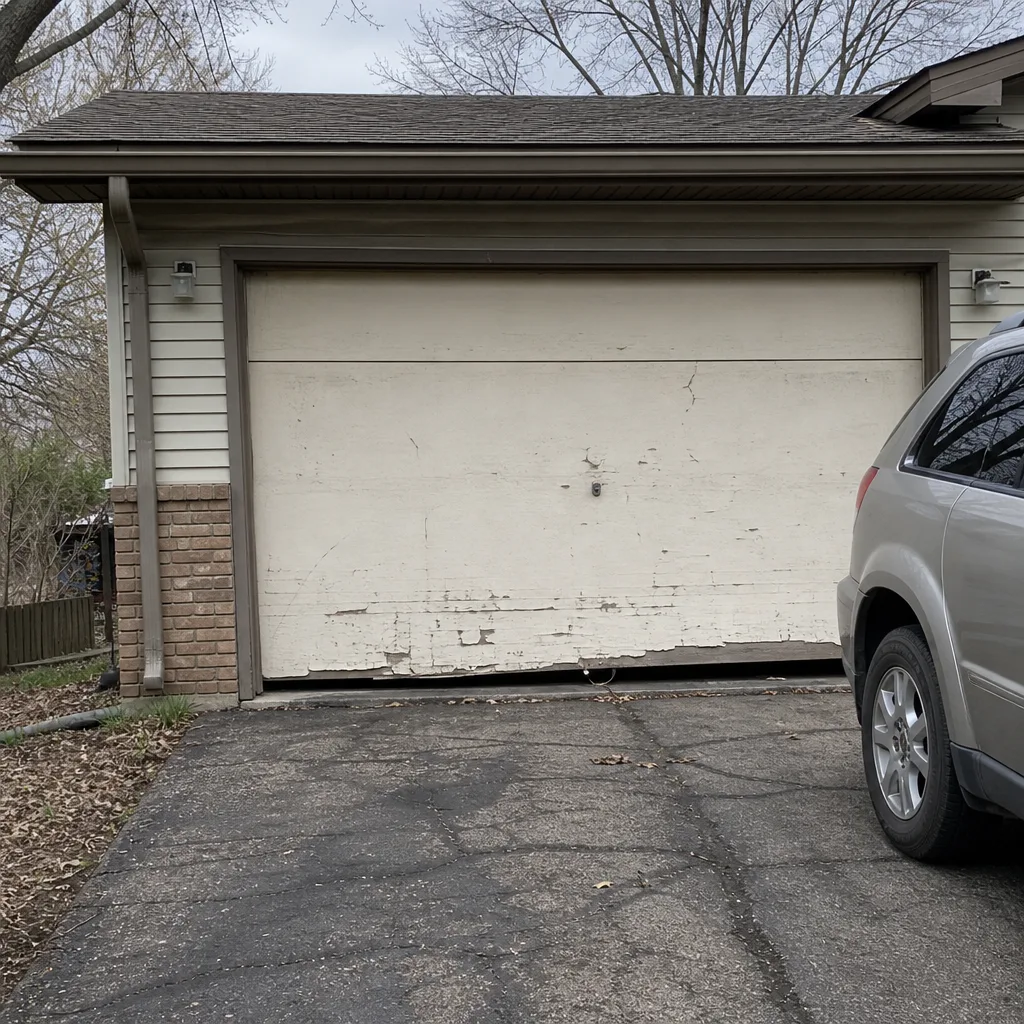 Before
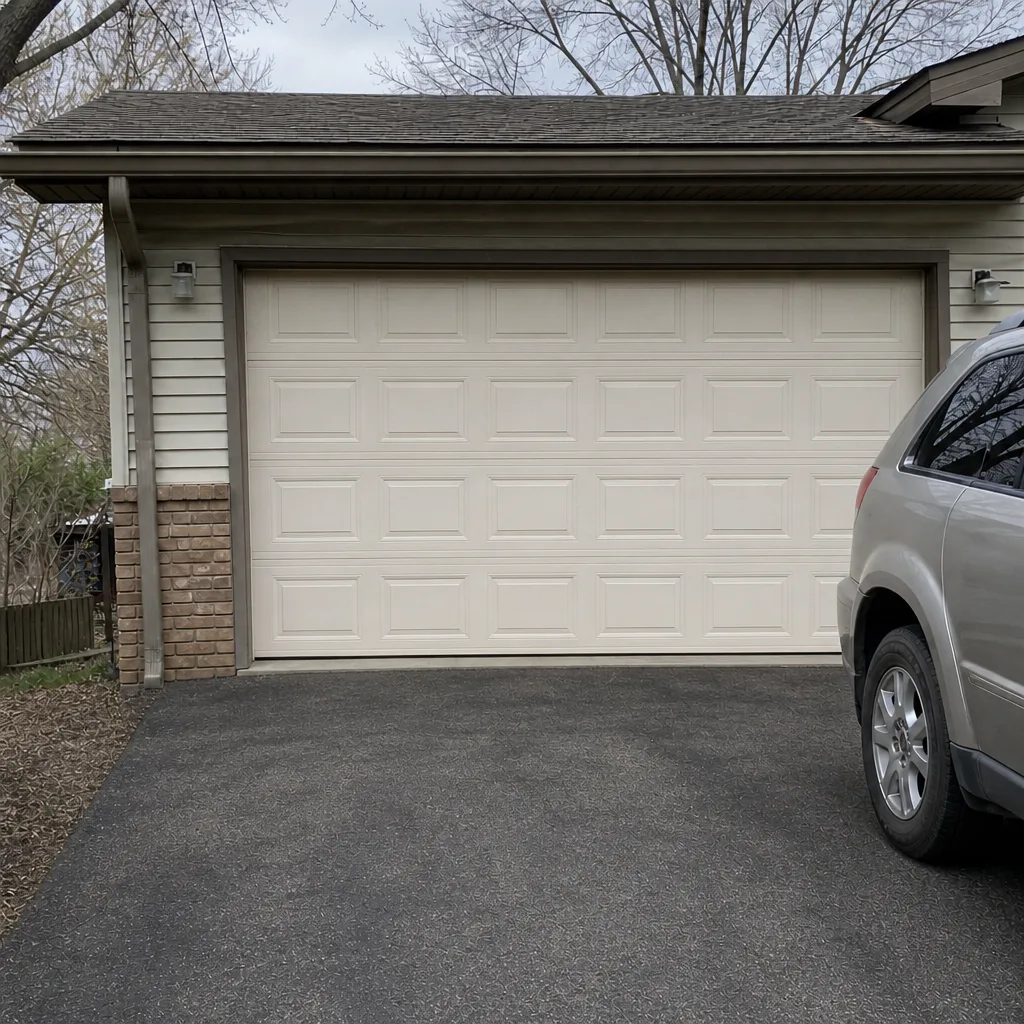 After
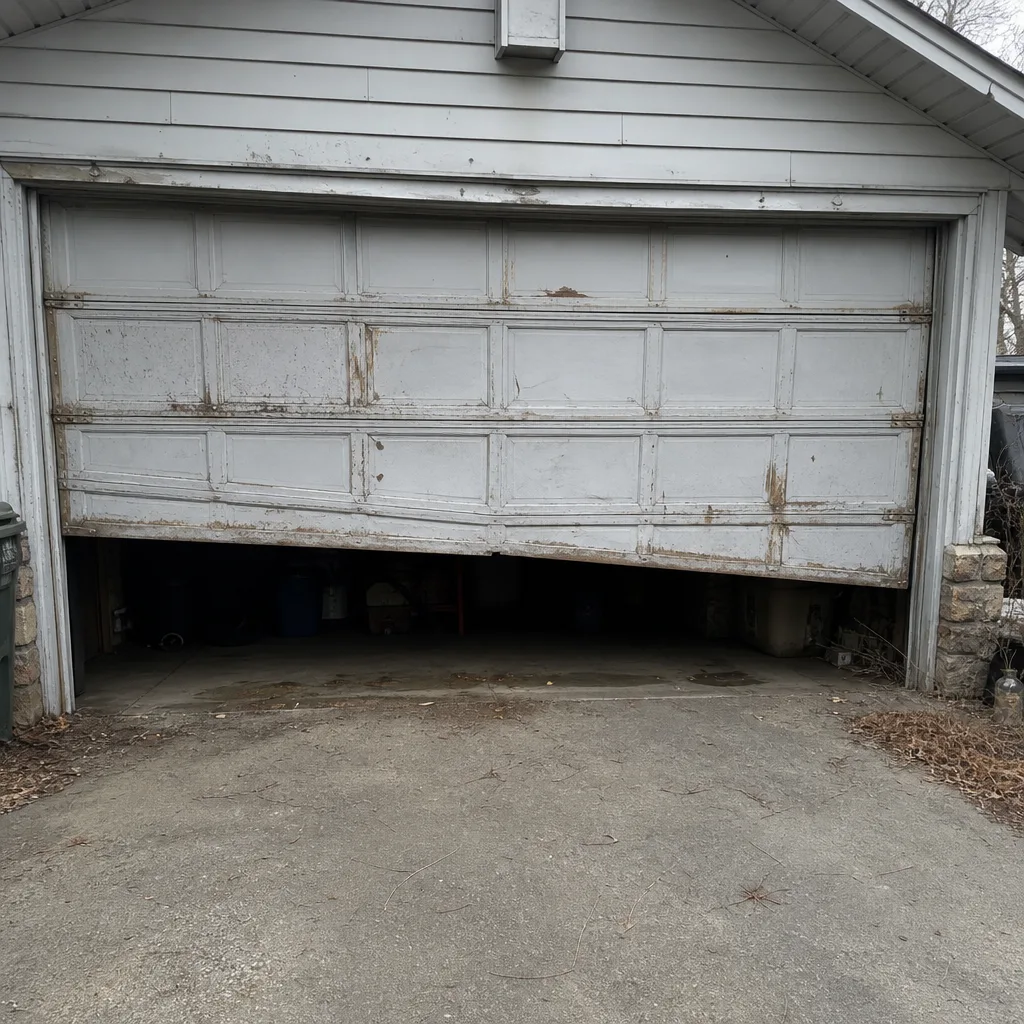 Before
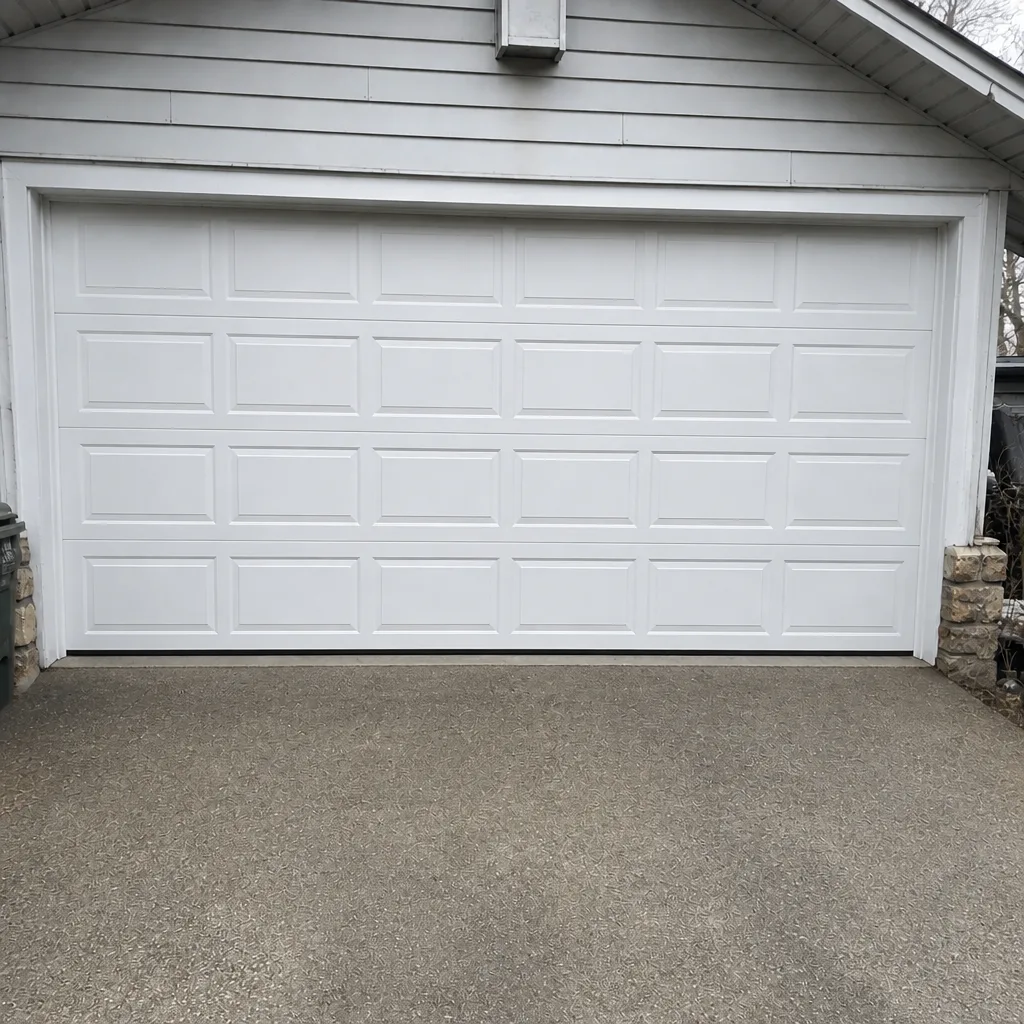 After
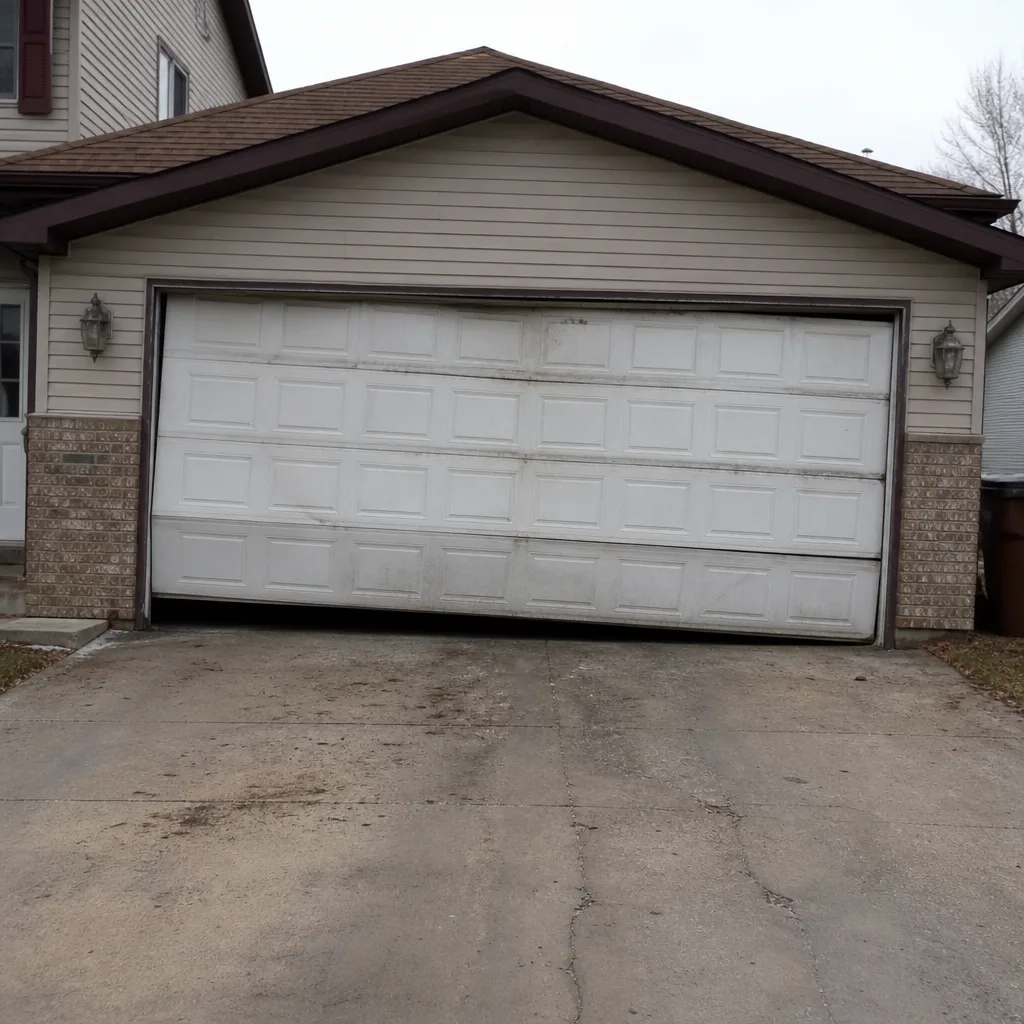 Before
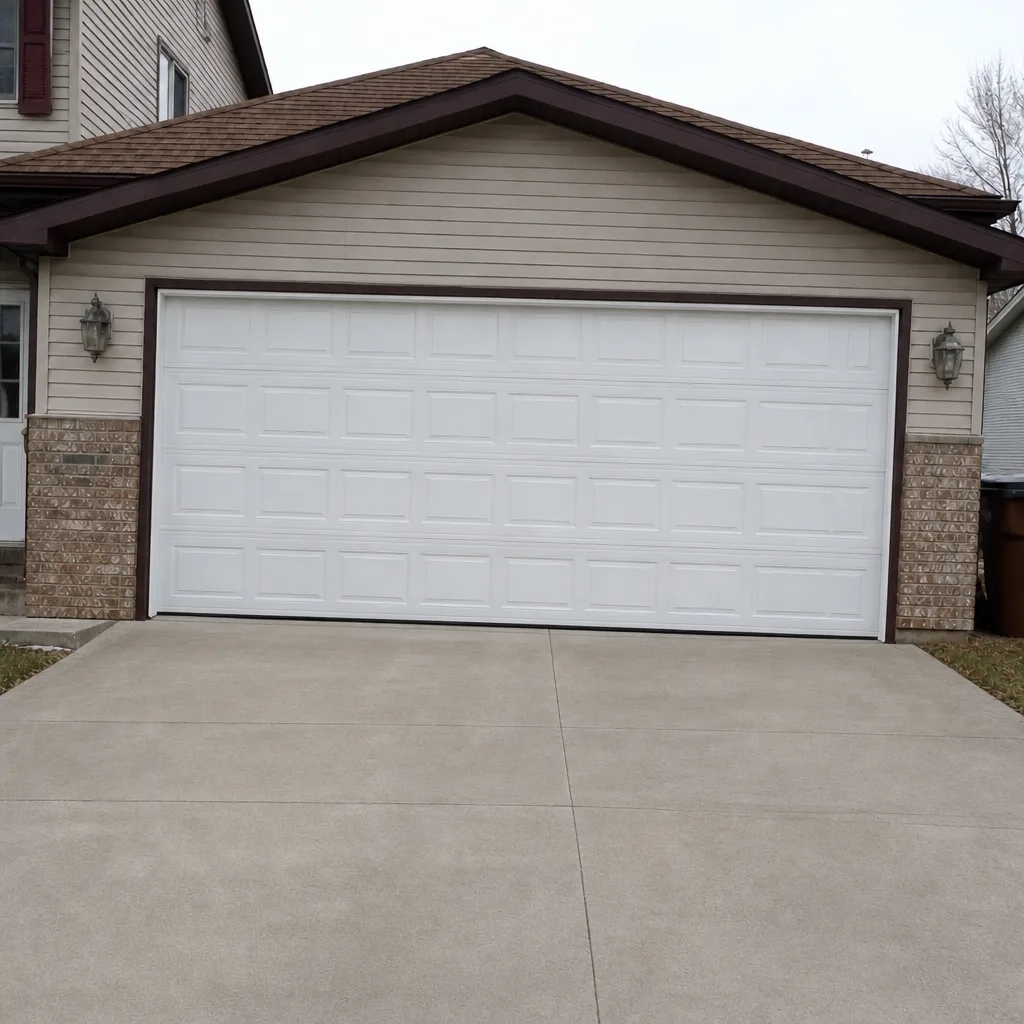 After
When to Call a Professional
Some garage door problems are safe to investigate yourself: a blocked sensor, ice at the threshold, a stiff roller. Others are not. Call a professional if you see a broken spring, a slack or snapped cable, a door that’s off the track, a door that’s hanging or sagging on one side, or any sign of burning or grinding from the opener itself. These are the situations where forcing the door or the opener causes the most damage, and where the work involves real risk. Springs and cables are under heavy tension, and the opener has electrical components. Both deserve a trained technician.
Garage Door Repair Shakopee offers free estimates in Shakopee. Call (866) 479-4598. We answer 24/7, with fast dispatch from 7am to 7pm, Sunday through Friday. The local pro is licensed and insured as their state requires, and the price is quoted and agreed before any work starts.
Frequently Asked Questions
Stop operating the door immediately and don’t try to lift it by hand. A broken spring removes the counterbalance, which makes the door very heavy and prone to falling or twisting off track. Call (866) 479-4598 and describe what you see, and leave the door where it is until a technician arrives.
Yes, if the springs and cables are intact. Close the door fully, pull the manual release cord, and lift the door by hand slowly. Never do this if you see a broken spring or a slack cable, because the door can come down or jump the track. If you’re unsure, call us and we’ll talk you through it.
Spring repair typically costs $180-$340 for one spring, and most homes need a matched pair replaced together, which runs about twice that. The written estimate sets the final price, and it’s agreed before any work starts. Call (866) 479-4598 for an exact quote; estimates are free.
It depends on the reason. If a blocked sensor or ice at the threshold is stopping it, that’s a quick fix. If the door binds partway or the springs are damaged, it’s a call-us-now situation, especially in winter when an open door risks frozen pipes and lets animals in. We can help you secure it while you wait for repair.
No, the price you agree to in the written estimate is the price. We quote the job before any work starts, so there are no surprises when the invoice arrives. If we find something additional during the repair, we’ll discuss it with you before doing the work.
We offer same-day service for repair and emergency calls whenever scheduling allows. Call (866) 479-4598. We answer 24/7, and fast dispatch runs from 7am to 7pm, Sunday through Friday. If you reach us outside those hours, we’ll book you into the next opening.
The Bottom Line
Garage door emergencies in Shakopee cluster around bad weather, and the first ten minutes decide how the repair goes. Stop pressing the opener. Don’t force a door with a broken spring or a jumped track. Use the manual release correctly, re-engage the opener carefully when power returns, and secure a stuck door against cold and animals while you wait. Know the brand in your garage, check your springs before winter, and call when the work involves springs, cables, or anything electrical. The price is quoted before work starts, and the estimate is free. One call covers the door, the opener, and everything in between.
Call (866) 479-4598 for a free estimate. We answer 24/7, with fast dispatch from 7am to 7pm, Sunday through Friday.
Written by the team at Garage Door Repair Shakopee.